


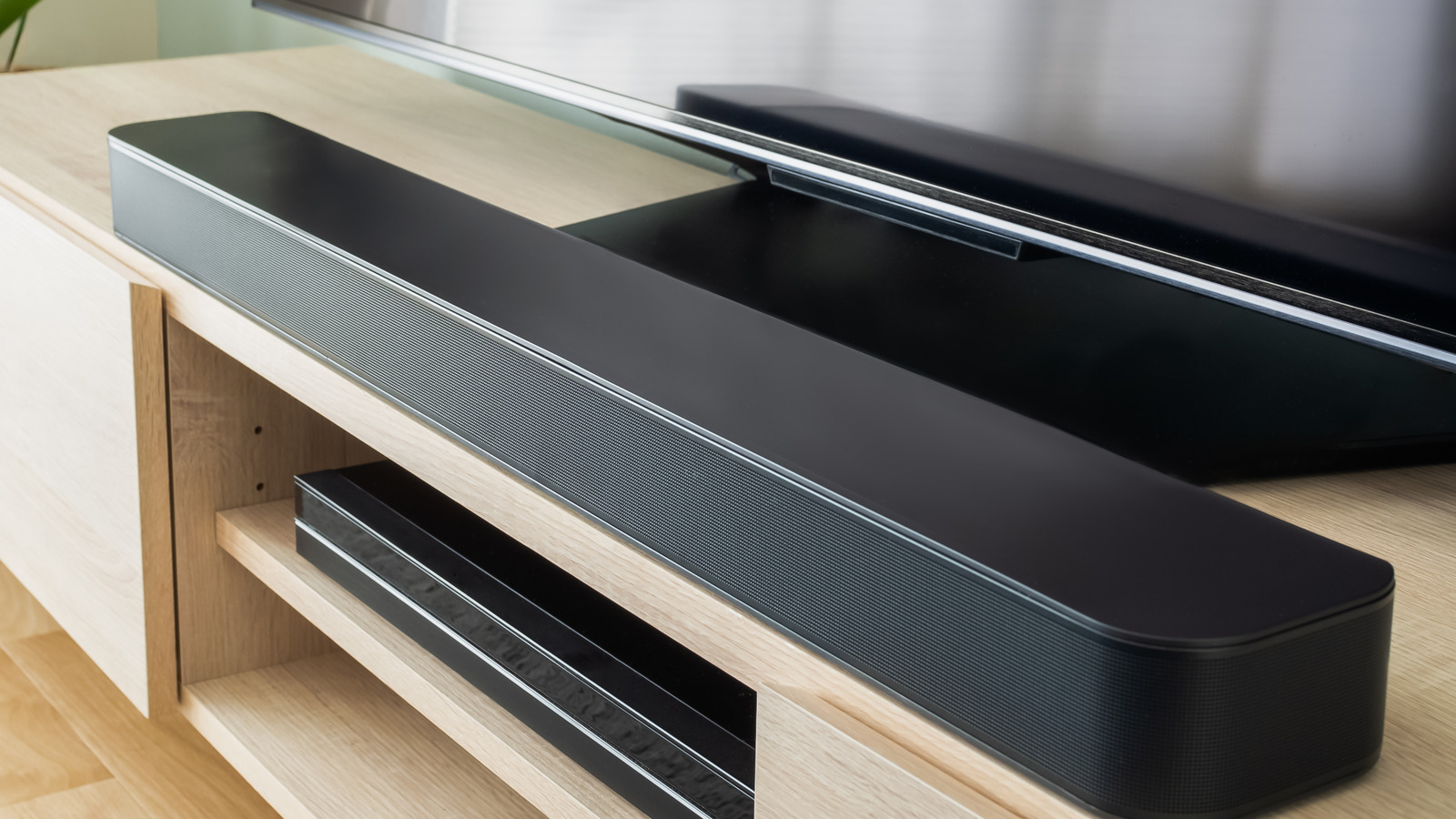
A quality audio-visual experience is something that many people covet from the comfort of their own homes. Splurging on a good television with all the bells and whistles one would expect from a sizeable investment is the first step most people take. However, in this never-ending quest for picture quality, most people forget that audio matters just as much, if not more. You may have a high-end TV with state-of-the-art visuals, but experiencing any form of media on it will be lacking without a proper audio device that lends a ton of weight to the sounds and music that play in your favorite TV shows and movies.
TV speakers can only do so much before you’ll eventually find yourself wanting an external audio output device that augments your viewing experience. Soundbars are an excellent option for audiophiles, serving as an excellent aesthetic touch to your living room that doesn’t take up too much space while also improving the audio quality of your games, shows, and films considerably. If you’re convinced about getting a soundbar, then keeping the following helpful tips in mind will go a long way in making the most of this system.
Placement is king
Proxima Studio/Shutterstock
As obvious as this piece of advice may be, it’s entirely possible that you may place your new soundbar in an awkward position, which will hamper its audio output considerably. The first thing to keep in mind is whether to opt for a wall mount or to place the soundbar as is on a TV unit or something similar. Both options are viable, although it’s always recommended to keep a soundbar under the TV for the best audio experience. If the soundbar is kept on a TV unit, then it’s important to keep it on an even surface to prevent any audio issues that may stem from its imbalanced placement.
In both instances, any obstructions in front of the soundbar should be done away with. The last thing you’d want is for the audio to bounce off random surfaces. In the case of certain soundbars, close proximity to wireless devices can cause interference, leading to unwanted humming or buzzing sounds. Another thing to keep in mind is that, just like most other electronics, soundbars may be affected by excess heat. If your soundbar receives an overly generous amount of direct sunlight every day, then it’s recommended to keep it covered to prevent any adverse issues from arising.
Get acquainted with the various sound modes
Marekfromrzeszow/Getty Images
Most soundbars come with a bevy of sound modes that switch up the audio emanating from these devices to suit a variety of use cases. Standard mode is common across most soundbars and is a perfect all-rounder if you don’t want to fiddle around with these settings all the time. The self-explanatory cinema mode is great for movies and TV shows. If you like to play music on your television from time to time, then switching to music mode is highly recommended. Some soundbars come equipped with a sports mode to make roaring crowds and emotional commentaries sound all the more engaging. If you’re an avid gamer, then check your soundbar settings for a game mode that enhances immersion and reduces audio latency, the latter being a godsend for multiplayer gaming.
One of the most important sound modes in any soundbar is one that boosts dialogue volume. Many cinemaniacs have faced issues where the noise and music in their films and shows — especially ones with surround sound support — overpowers any spoken dialogue in certain scenes. Straining to hear what your favorite actor is saying is far from the best way to enjoy a movie, which is why a soundbar’s voice mode can go a long way in mitigating this issue.
Dolby Atmos support is a game-changer
Natalia Marna/Getty Images
Replicating the theater experience in the comfort of your home makes movie nights all the more immersive, and Dolby Atmos technology accomplishes this in spades. It’s easy to see why almost every modern blockbuster utilizes Dolby Atmos to let viewers experience the magic of surround sound. Mapping audio in a 3D space as opposed to a 2D plane is a game-changer, and a good soundbar can replicate this effect in your living room. Upward-firing speakers are a must to replicate the surround sound effect, and many all-in-one soundbars integrate this to let you enjoy the impact of Dolby Atmos audio on a budget.
A decent chunk of high-end Dolby Atmos soundbars come with additional upward-firing speakers to unlock an authentic surround sound effect. With the addition of rear speakers, watching a movie with Dolby Atmos support becomes a magical experience. Action scenes feel more impactful and crunchier, while horror movies scare you out of your wits when the dreadful music crescendos from all corners of your room as the tension ramps up.
Audio channels can make a world of difference
BobrinSKY/Shutterstock
Before we get into the nitty-gritty of audio channels, it’s important to know what these numbers mean. A soundbar that advertises itself as a 7.1.2 channel device has a total of seven main speakers, one subwoofer, and two upward-firing speakers to make for a quality surround sound setup. Learning about how these audio channels work can help you make an informed purchase when it comes to a soundbar. Is your room small or your budget low? A competent 2.1 soundbar under $200 is more than adequate for your needs. If you have more wiggle room — both literally and financially — then a 3.1 or 5.1 channel soundbar might be more up your alley.
Most of these soundbars can serve as an all-in-one solution, but opting for higher channels is where these audio systems become pricier and take up more space. 7.1.2, 9.1.2, and 11.1.2 channel soundbars are usually fully-fledged home theater systems that arrive with multiple speakers and a subwoofer. Even if your wallet can afford to purchase these high-end soundbars, your room’s acoustics should be compatible with these systems to ensure that you don’t end up with a subpar audio setup.
Dolby Atmos soundbars should be placed in rooms with flat ceilings
Ilya S. Savenok/Getty Images
Some Dolby Atmos soundbars come bundled with additional ceiling speakers that enable the surround sound experience. However, this isn’t the norm. In most cases, these high-end soundbars come with built-in or separate upward-firing speakers to conserve space and let you enjoy the Dolby Atmos experience in a neat package. These soundbars are very powerful but need flat ceilings to optimize the surround sound effect.
This is because upward-firing speakers are built to bounce any audio from a flat surface to create the illusion of sound emanating in a 3D space. Sloped ceilings cause the audio to fire off at odd angles, which hampers the surround sound effect considerably. If the acoustics of your living room aren’t compatible with upward-firing speakers, then you’re better off with ceiling speakers to enjoy the perks of Dolby Atmos and DTS:X audio. On a similar note, a soundbar with upward-firing speakers shouldn’t have anything blocking its path vertically. Any obstructions can cause sounds to bounce off erratically before they even reach the ceiling, which is a very common occurrence when people place their soundbar right underneath the television without affording it any breathing room.
Choose between an active and passive soundbar
Olga Yastremska/Getty Images
Most soundbars on the market are active soundbars with a built-in power supply and amplifier. They’re easy to install and remove, making them perfect if you don’t want to commit to a permanent audio setup. Connecting these devices requires either Bluetooth or a wired connection that can be plugged directly into the television, rerouting the audio source through the soundbar without any issues. For all this convenience, the only tradeoff is that active soundbars are marginally weaker than their passive variants, which is a compromise many people are willing to make.
On the other hand, a passive soundbar can’t amplify or process audio on its own. You’ll need a separate amplifier that the soundbar can connect to for it to work. It may seem like a lot more effort, but the sound quality and power of these speakers are a level above their active counterparts. While the setup itself may be more permanent and harder to dismantle, you can upgrade the amplifier separately to improve audio quality without having to replace the soundbar itself. If you want an audio system that isn’t too complicated to set up, then active speakers are right up your alley. Meanwhile, passive soundbars are more ideal for households with permanent setups and dedicated AV units.
Choose the most optimal connection for your soundbar
Proxima Studio/Shutterstock
Soundbars can be connected to your television or any other device in a myriad of ways. While passive soundbars almost always require a wired connection, active soundbars aren’t restricted in such a manner. Most of these soundbars feature Bluetooth functionality, making it the most convenient way to connect this device to your TV. This does lead to some audio latency issues, but most users won’t mind as long as they can enable a wireless connection between their soundbar and the TV without any hassles. However, if audio quality is your foremost priority, then you should definitely opt for an ARC (Audio Return Channel) connection. A single HDMI cable is all it takes to establish this connection, which is necessary to enjoy surround sound on more feature-rich soundbars.
With the advent of HDMI 2.1 and its higher bandwidth speeds, your soundbar can be connected via an eARC (Enhanced Audio Return Channel) connection to enjoy lossless audio, which is a must for demanding Dolby Atmos and DTS:X audio. ARC and eARC connections also let your TV remote control the soundbar’s volume with CEC support to make things more convenient. Now, there’s a chance that your television may be so old that it lacks any HDMI ports or ARC compatibility. In such an event, a simple optical connection can get the job done, although this limits the potential of your soundbar and locks you out from enabling surround sound. Unless you have a basic soundbar that lacks any Dolby Atmos or DTS:X, we don’t recommend using an optical cable over an HDMI ARC connection.
A subwoofer is great for improved bass
FASTRO/Shutterstock
An all-in-one soundbar may be a convenient solution for all your audio needs, but you may want something more heavy-duty for a better cinematic experience. Bass is an integral part of the overall audio package, and this is usually lacking on soundbars without a subwoofer. If you wish to enjoy high-quality music and expertly crafted movie scores without any compromises, then it’s important to purchase a music system that contains both a soundbar and a subwoofer.
Low-frequency sounds are lost in a solitary soundbar but feel all the more impactful with a subwoofer. Your neighbors may not love the bassy vibrations, but the sheer impact it has on the overall audio experience can’t be denied. Keep in mind that most soundbars with subwoofers also come with external speakers, so you should consider the dimensions of your room before opting for a feature-rich soundbar that takes up more space.
Smart soundbars can be a great addition to the living room
marekfromrzeszow/Shutterstock
Many soundbars come bundled with the latest tech, so it shouldn’t be a surprise that some of these devices feature integrated voice assistant support. While the vast majority of soundbars are compatible with Google Home or Chromecast, only a few have a built-in Google Assistant or Amazon Alexa. It’s an important distinction, since the former can connect to your smart home network but not serve as a way to interact with your voice assistant directly.
Meanwhile, advanced soundbars with a baked-in assistant essentially double as another smart device that can be used to issue voice commands and the like. These are a bit on the pricier side, so you should only opt for these soundbars if you are either into the smart home ecosystem or want to enjoy the benefits of a smart assistant-enabled device without purchasing a separate piece of tech to facilitate the same.
Auto-calibration is an easy way to set up a soundbar
Milea/Getty Images
Soundbars with surround sound tech usually have an auto-calibration feature that maps the 3D space of the room they’re set up in. By gauging both the listening zone and the placement of the sound system, a high-end soundbar can automatically set up the best audio experience for your needs. It’s convenient, doesn’t take too much time, and barely requires any adjustments after the device is calibrated. However, this shouldn’t stop you from tinkering with the soundbar’s settings if you want to personalize the experience to your liking.
After all, there is a bevy of features that can be customized to suit your needs. While auto-calibration may sort out the 3D audio space, the rest of the settings can still do with a human touch. Adjusting the bass and treble levels while checking out the equalizer is just as important as calibrating the sound. You shouldn’t ignore these settings just because your hi-tech soundbar can automatically configure other things without a hitch.
Check for software updates regularly
Proxima Studio/Shutterstock
Any piece of tech needs its hardware and software to work harmoniously. While there’s not a lot that can be done on the former side of things after a purchase is made, manufacturers make it a point to release software updates for their numerous offerings. Soundbars are no exception here, with companies like Sony and Samsung updating the firmware of these sound systems at regular intervals to optimize their performance.
It can be easy to neglect software updates for your soundbar, but this will prevent you from enjoying the improvements made to the audio output of this device. Sometimes, these updates also come with new features that can completely augment your audio experience. They don’t take too long to install, and the impact they have on overall device performance is substantial. This process is usually automatic, but configuring the settings to regularize these updates and manually checking for firmware improvements is a good practice to inculcate.
Familiarize yourself with all the additional features of your soundbar
Naraya Dika/Shutterstock
The tech world moves at a frenetic pace, to the point where a five-year-old soundbar would feel downright archaic compared to a modern variant. However, all these enticing features are wasted if you don’t take some time to check out what your soundbar is capable of. For starters, most modern soundbars support Bluetooth, making it easy for you to connect your phone and play music without having to switch on the TV. In fact, some soundbars go the extra mile and install music apps like Spotify and Apple Music in the soundbar itself, making it an independent device perfectly capable of livening up the party all on its own.
You should also be aware of any manufacturer-specific features in your soundbar. Samsung’s Q-Symphony and LG’s WOW Orchestra are both great additions to your audio experience, enabling both the TV and soundbar speakers to work in tandem. It enhances the surround sound experience and lets you enjoy the benefit of more audio channels without having to pay a premium for the same. All these features — and more — can do a great job of helping you get the most bang for your buck from your soundbar, but only if you familiarize yourself with how they work.
DTS:X functionality is great if you have a Blu-ray player
Kuleshin/Getty Images
Along with Dolby Atmos, DTS:X is another surround sound technology that lets you enjoy an immersive audio experience. There are a few differences, the biggest one being that DTS:X is open-source. There’s no restriction for manufacturers to use this technology, allowing them to map audio anywhere in the 3D sound space without being restricted by Dolby Atmos’ pre-defined speaker layout. This means that you can potentially enjoy a better surround sound experience with DTS:X as compared to Dolby Atmos — but there’s a catch.
Unlike Dolby Atmos, DTS:X isn’t widely supported. Most streaming services only have support for Dolby Atmos audio, and you’ll need to purchase Blu-rays for movies with DTS:X compatibility to truly enjoy this surround sound tech. Given that Blu-ray players aren’t exactly common, only the most ardent cinephile should prioritize DTS:X support in the soundbar they’re purchasing.
Via: bgr.com