


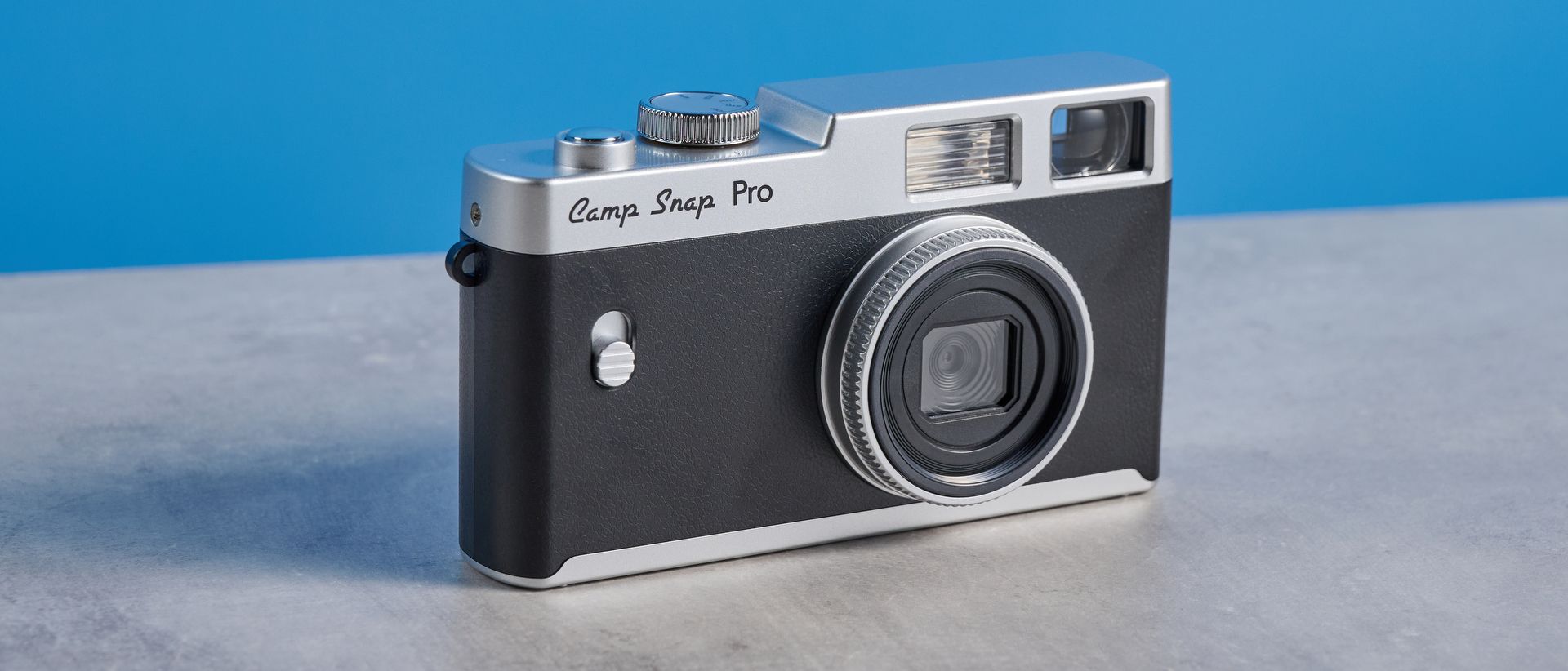
The Camp Snap CS-Pro is a suped-up, premium version of the original fan-favorite Camp Snap screen-free camera. I use the original model regularly, so I can say with certainty that Camp Snap has listened to its users and made upgrades with them in mind.
This new iteration offers a nostalgic element with a color filter dial featuring four filter choices, and the lightweight nature of the cameras makes this a really simple point-and-shoot to use. The much-improved battery life and affordability make this new model a no-brainer upgrade.
But despite all the improvements, this CS-Pro isn’t perfect. There is still an occasional lag in the shutter response (which was also a problem on the original), and the viewfinder is offset, making it a little difficult to perfectly frame photos.
But could this be the perfect hobby camera for you? You can find out why I think it’s one of the best cheap cameras by reading my full Camp Snap CS-Pro review.
Camp Snap CS-Pro review: Cheat sheet
- What is it? A screen-free 16MP digital camera
- Who is it for? Anyone who needs a hobby camera to capture memories with friends and family
- How much does it cost? The Camp Snap CS-Pro is available for $99 / £89 on the Camp Snap website
- What do we like? The color filters add some extra fun to the camera. It’s lightweight and easy to use as a point-and-shoot. It has a long battery life and is very affordable too
- What don’t we like? Shutter response is delayed at times (but improved from the original version of the camera). The viewfinder is offset, so it can be tricky to frame at times
Camp Snap CS-Pro review: Specs
|
Price |
|
|
Viewfinder |
Yes |
|
Sensor |
16MP 1/3.06-inch CMOS |
|
Lens |
2.56mm, f/2.2 (22.5mm 35mm equivalent) |
|
Shutter speed |
1/1000s – 1/30s |
|
Filters |
4 preset filters |
|
Filter thread |
37mm standard |
|
Flash |
Built-in xenon flash |
|
MicroSD |
4GB built-in |
|
LCD screen |
No |
|
Power |
Rechargeable via USB-C |
|
Battery life |
500 shots |
|
Dimensions |
5 x 3 x 1 inches |
|
Weight |
5.12 ounces |
Camp Snap CS-Pro review: Price & availability
The Camp Snap CS-Pro screen-free camera is available directly from the Camp Snap website. It’s available on the U.S. site for $99 and on the U.K. site for £89. This is quite the price hike from the original Camp Snap camera, which you can still purchase for $65 / £53.
Where the previous model is available in more than nine different colors, the CS-Pro only comes in an understated black color with silver accents on the top and bottom of the camera. This change makes the camera feel a little less fun, but a lot more premium.
There are also reusable film cameras with a similar look, like the Kodak Ultra F9, which costs $49. But the perk of using a Camp Snap instead is that you’ll never need to purchase replacement film, and it’s far easier to get your pictures back.
Camp Snap CS-Pro review: Design
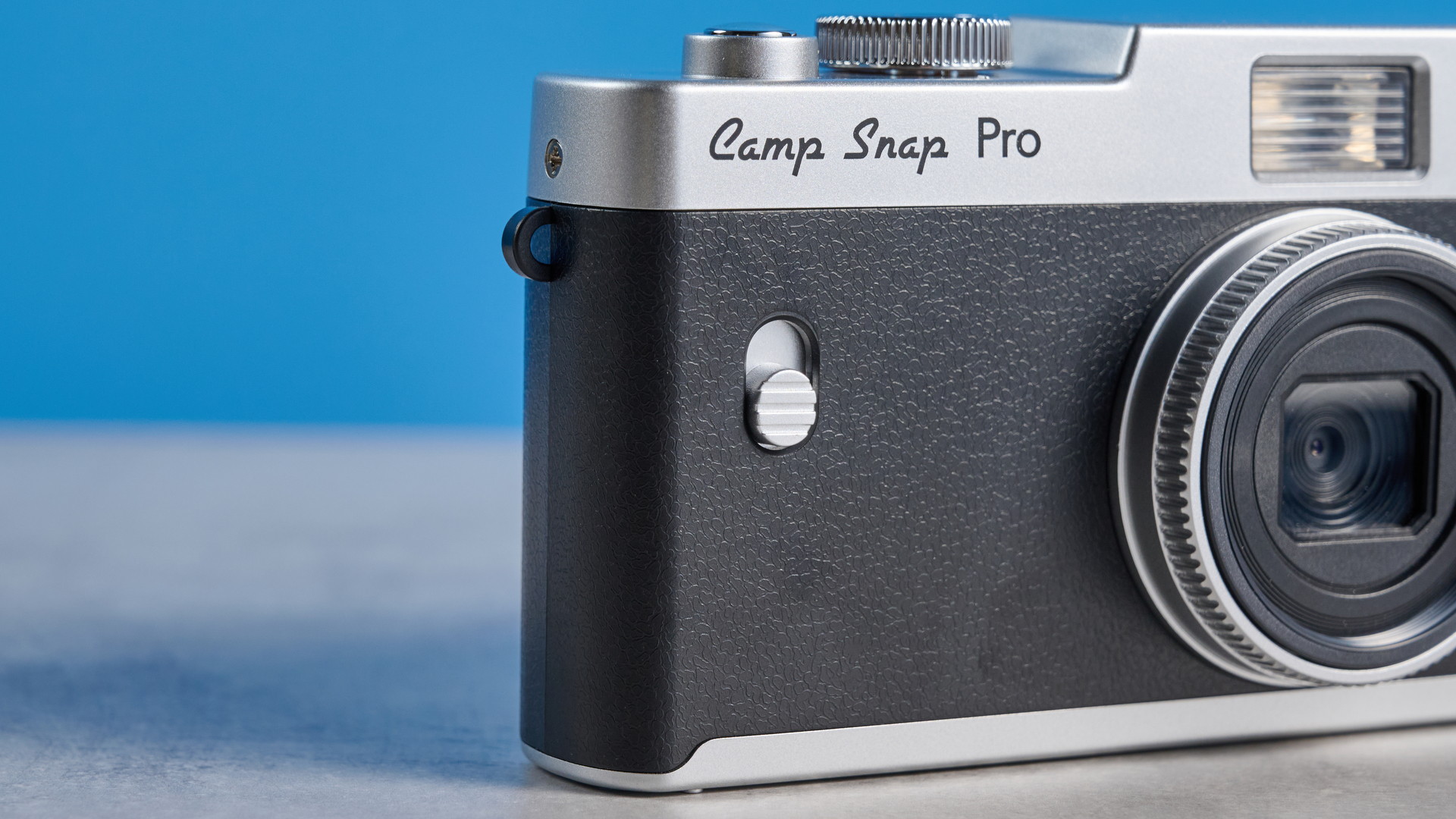
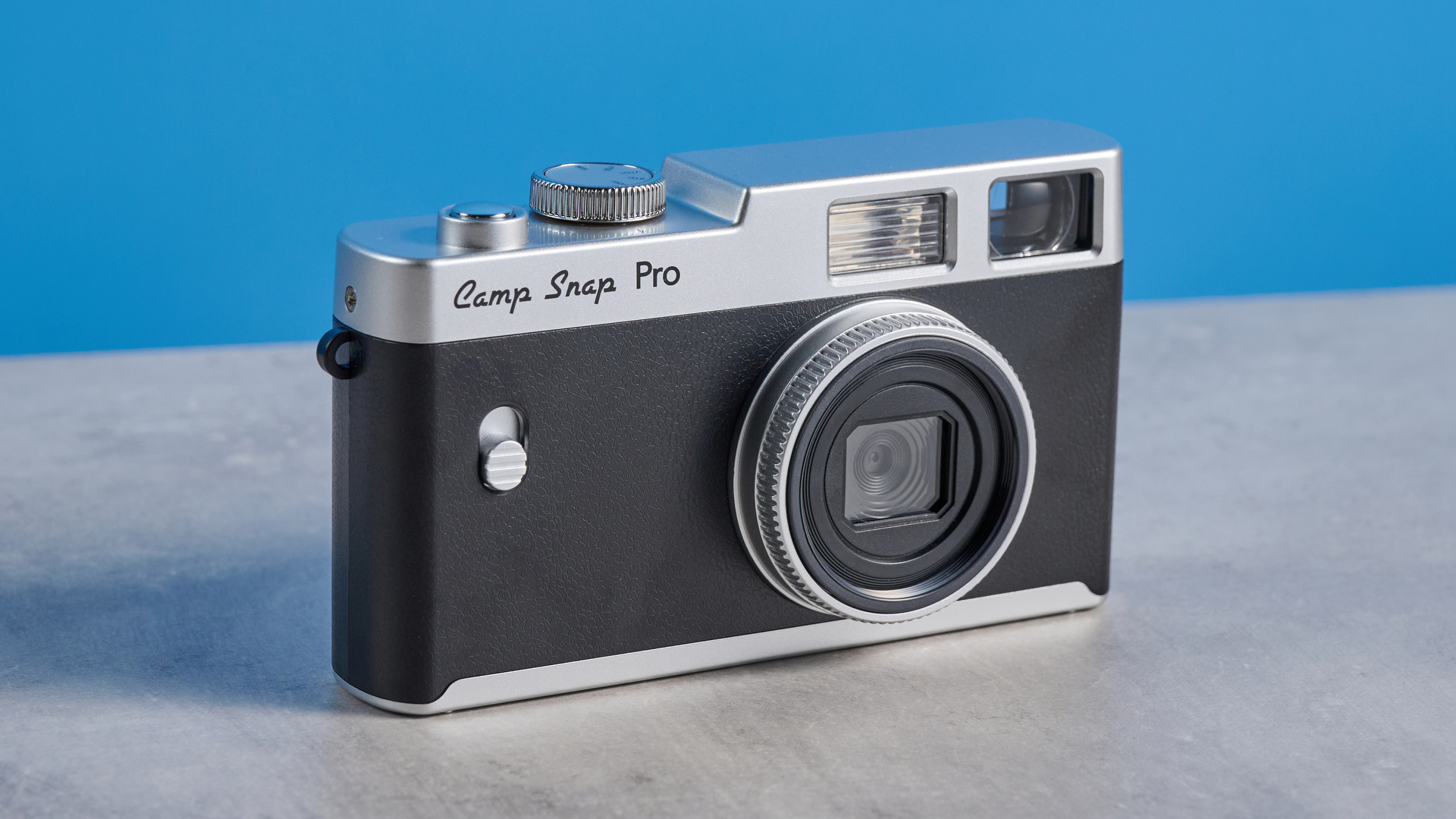
The Camp Snap CS-Pro is certainly a step up in terms of looks from the original iteration of the Camp Snap camera. The new design is still incredibly simple, but takes on a more retro style. To me, it looks like a color filter camera, like something made by Fujifilm. There is a dial on top of the camera to turn the camera on and switch between color filters, but much like the rest of the camera, the dial is plastic and pretty flimsy, so I’m not sure about the longevity of the components.
It’s slightly larger than the original Camp Snap (4.5 x 2.4 x 0.9 inches), as the CS-Pro measures 5 x 3 x 1 inches; however, it can still fit into my pocket when I head out for a stroll. To me, this is the beauty of the Camp Snap camera — having something small that you can take with you quite literally anywhere is super convenient, and the best camera is the one you always want to have with you.
The small size also means it’s incredibly lightweight. The first time I picked up the camera, I felt like a cartoon character being duped into picking up something as light as a feather, whilst having 10 tons written on the front. The body is plastic, meaning the camera weighs in at just 5.12oz, although this is a little heavier than the original Camp Snap, which was 3.28oz. I didn’t notice any added weight in my pockets or bag with the new model, so I could take it with me literally everywhere.
But the plastic design has its drawbacks — it feels flimsy as hell. The camera has a black body with a metallic silver coating on the top and bottom of the camera. This became scuffed on my first outing with the camera, so while it looks good initially, the coating isn’t durable at all. You also can’t really prevent this wear and tear, as the case for the original camera that Camp Snap sells won’t fit on the new model, and it’s not compatible with the waterproof case either.
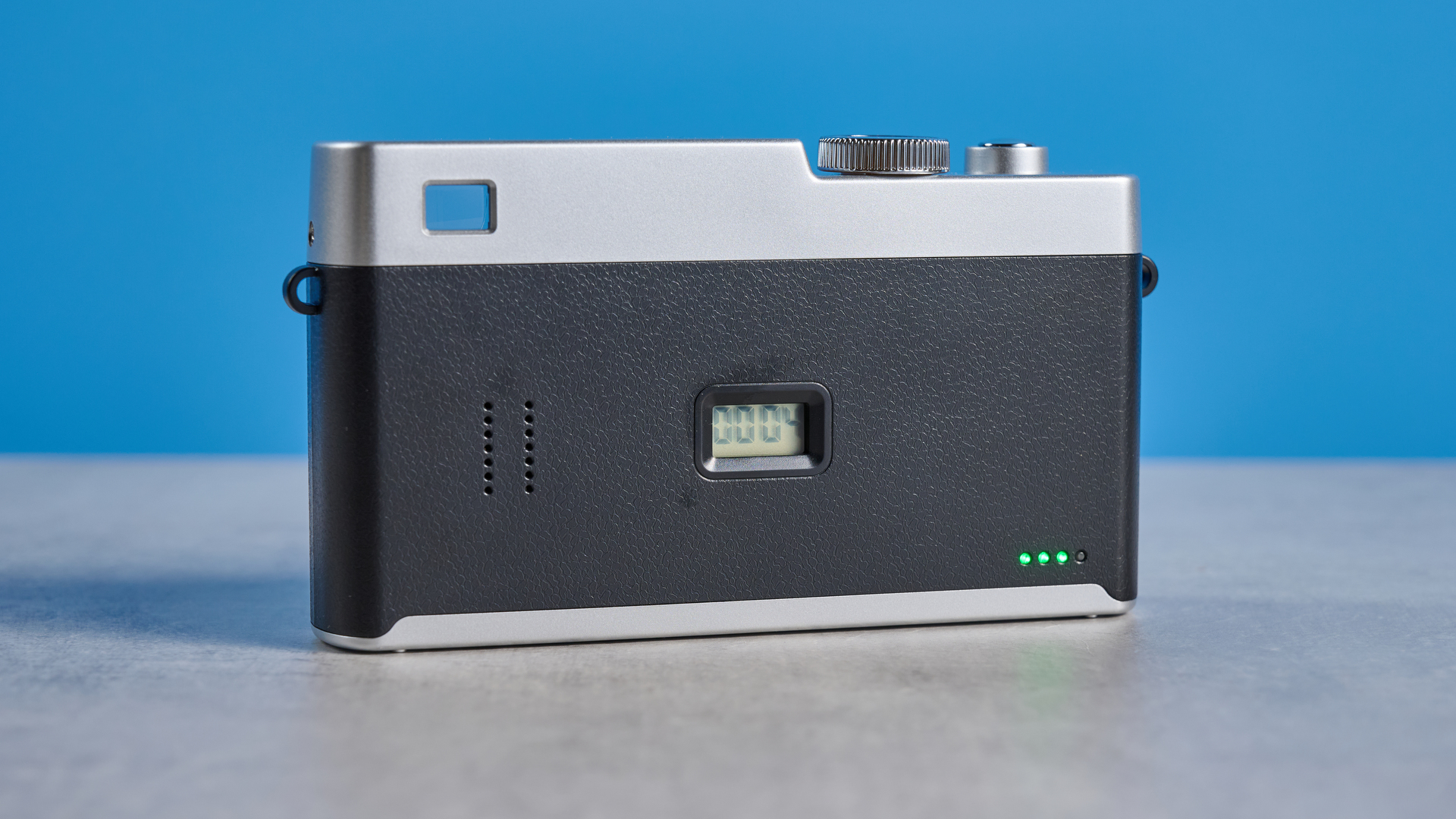
Of course, the main design point of this camera, though, is the lack of a screen. Much like film cameras, you can’t look at the images you’ve taken, but have to “develop” them by transferring the files to your phone or computer. All you have is a digital display on the back of the camera that displays the number of shots you’ve taken. This gives you the “screen-free experience that I love so much. It completely takes away the distraction of checking if your hair looked good in that shot or if you blinked — it keeps you in the moment.
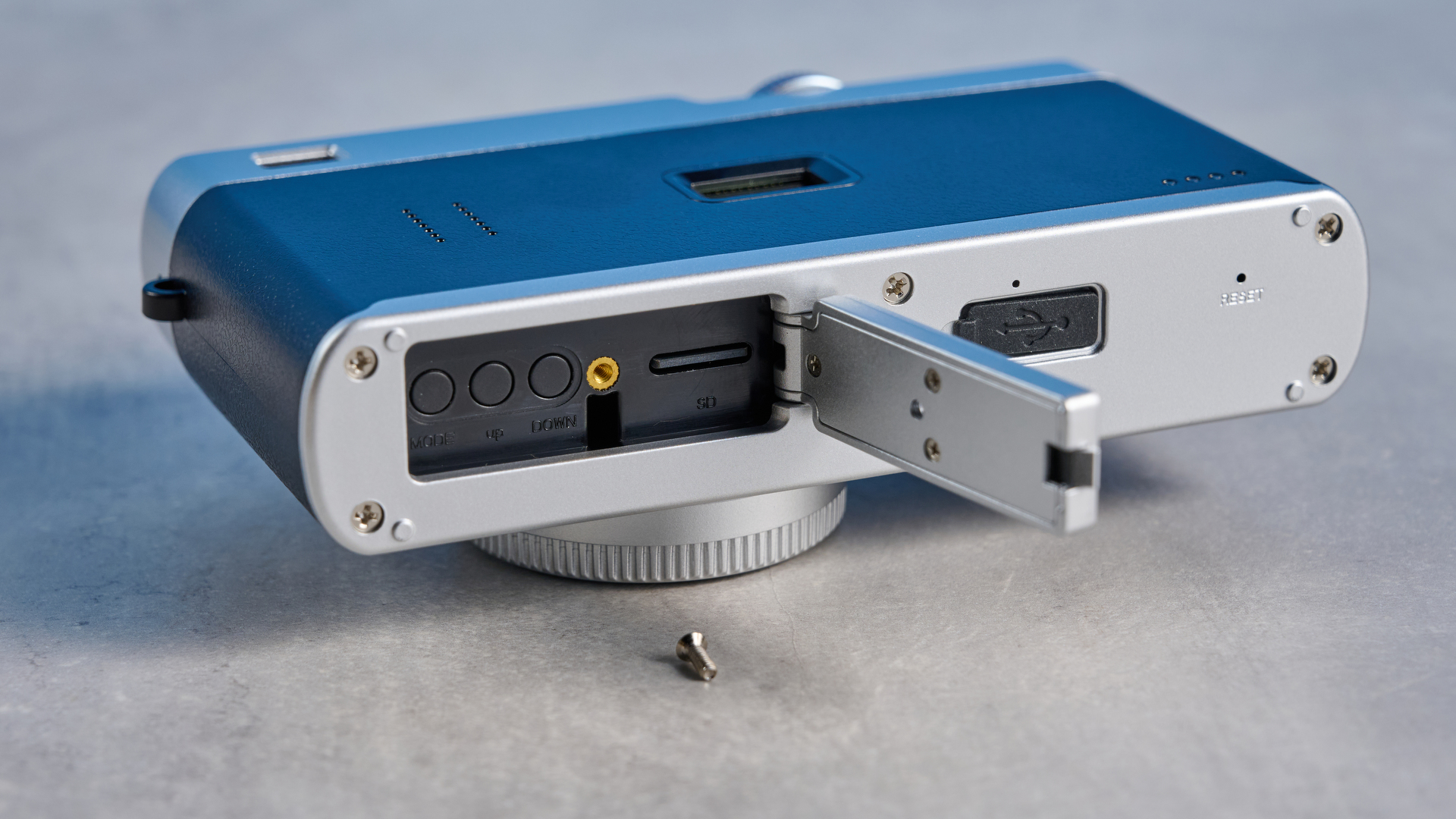
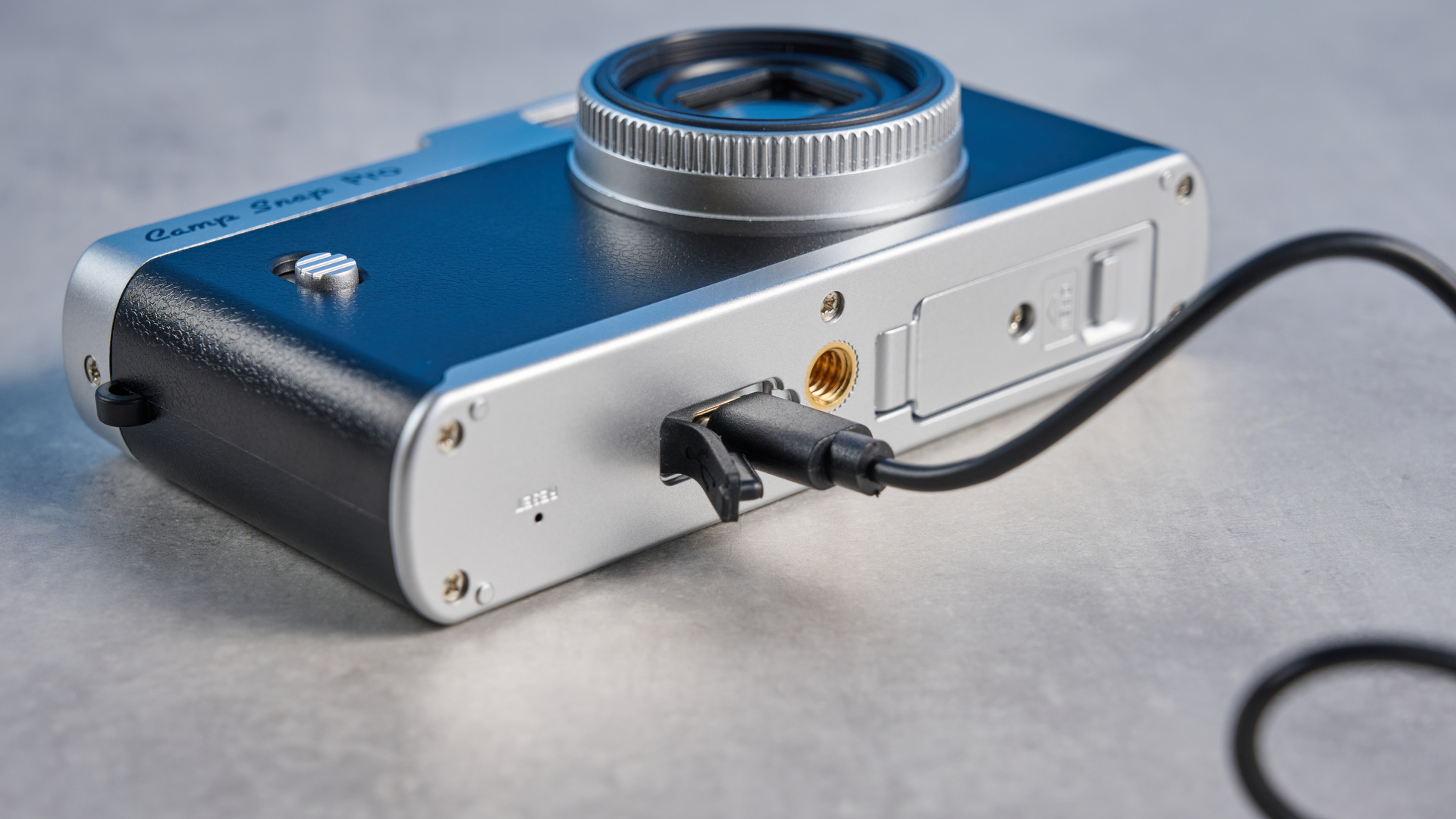
There’s a socket for a tripod on the bottom of the camera, which is an addition that makes this new model feel a little more versatile. However, you can’t set a time, so someone will still need to take the picture. The underside of the camera also houses the USB-C port for transferring pictures and the built-in 4GB microSD. This will hold approximately 1,500 to 2,000 pictures, but when I transfer my images from the camera, I like to delete them from the SD card so I always have storage. This is easy to do and works really well for me.
Camp Snap CS-Pro review: Controls
The Camp Snap CS-Pro has a color filter dial on the top (much like my Fujifilm X-E5) just to the left of the shutter button. The camera features four distinct color filter settings: Standard, two vintage simulations, and Black and White. These are super easy use and quickly responsive.
By selecting a color filter on the camera, the camera turns on with a click, and the green lights on the back light up to indicate how much power is remaining in the camera.
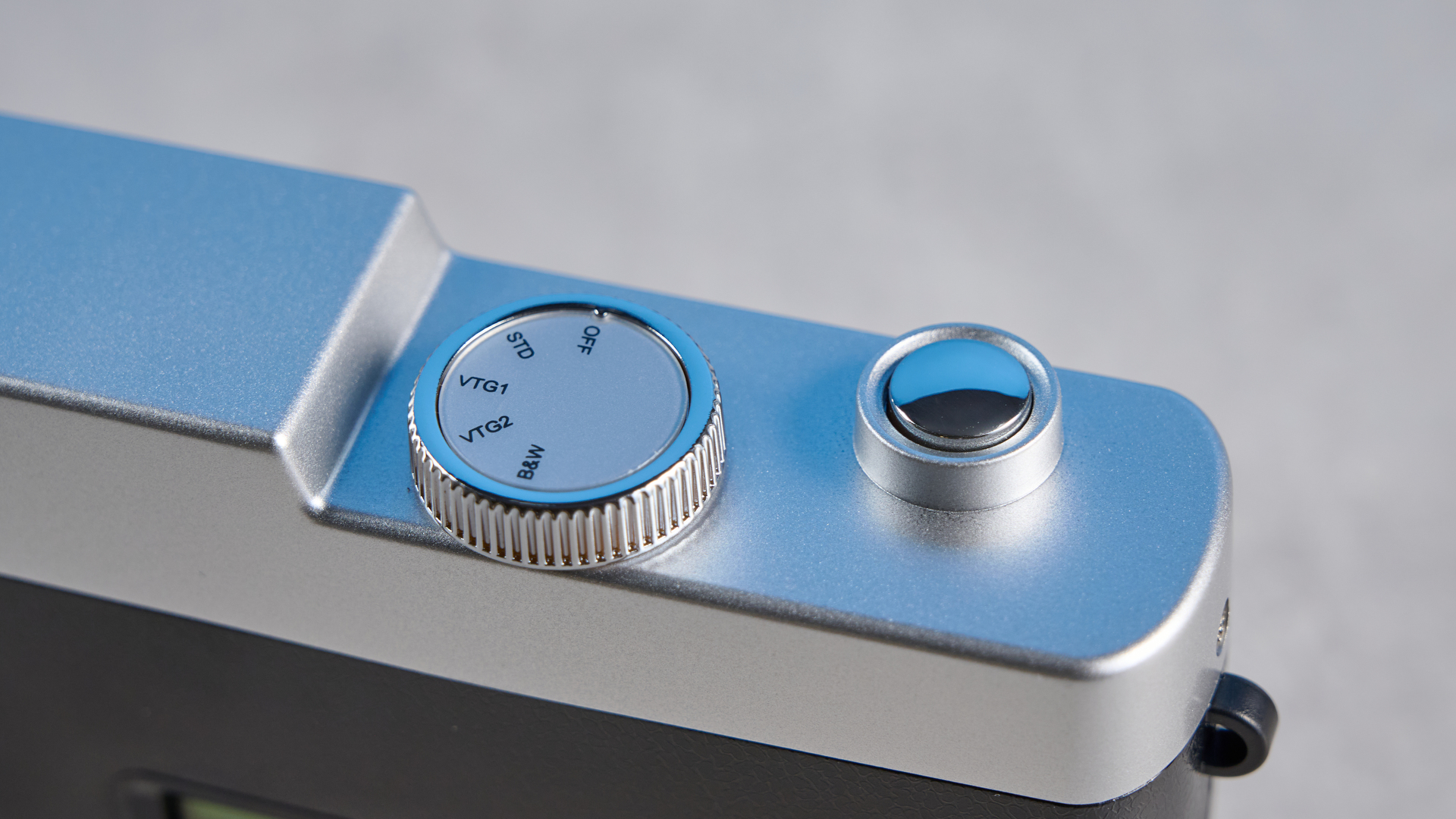
Next to the dial is the shutter button, which does what it says on the tin. However, you can’t take shots in quick succession, and there is some lag between pressing the button and the camera actually capturing the image. And other times it just beeped at me as if screaming “STOP!” in its own beep-y language. That said, this lag actually isn’t as bad as what I experienced with the old version of Camp Snap.
There’s a toggle on the front of the camera to adjust the flash settings between on, auto, and off. This is very easy to use, but I actually preferred the old design with this control on the back of the camera.
Beyond this, the controls are pretty hard to access as you’ll need a screwdriver. There is a hatch on the bottom plate that houses the buttons to adjust the date stamp in the metadata of the camera. I suggest doing this right away, as otherwise, when you download the images, they’ll be all jumbled up in your camera roll.
Camp Snap CS-Pro review: Lens & viewfinder
The Camp Snap CS-Pro has a 2.56mm fixed lens (which gives a field of view equivalent to 22.5mm on a full frame camera), so it offers a pretty wide range of view, making it perfect for group photos, as you’ll be able to see later on. It has a filter thread too, which enables users to attach 37mm filters.
Camp Snap specifies that the camera has a fixed aperture of f/2.2. However, when I looked at the metadata of the images, the aperture was at f/1.8. You also don’t get any manual control over the shutter speed, which is variable from 1/1000s to 1/30s, and the ISO changes between 100 and 1,600 too.
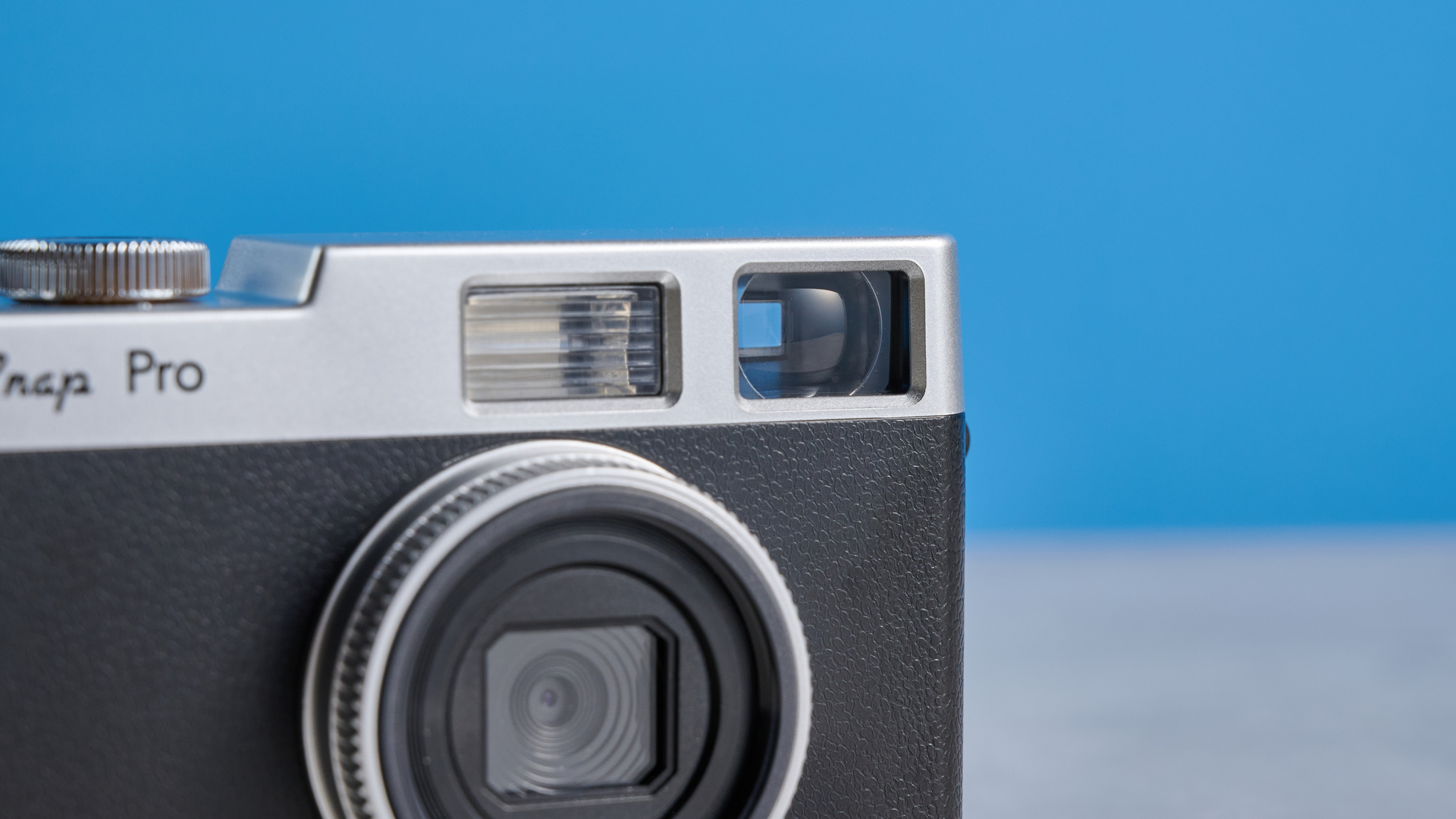
There is a small viewfinder window at the top left of the camera, but this could be a step backwards from the previous Camp Snap design. On the old model, the viewfinder is right above the lens, but on the new model, it’s off to the left, to simulate the look of a rangefinder.
It’s a straight-through optical viewfinder, too. So what you’re seeing is the view from the left-hand side of the camera. All this means that photos aren’t framed the same as they appear in the little viewfinder box, but as I said, this isn’t a camera that’s going to win you any photography awards.
We have reached out to Camp Snap’s representatives for clarification on the discrepancies in the aperture specs and the metadata retrieved from the camera. We have not heard back as of yet, but will update this article when we do.
Camp Snap CS-Pro review: Image quality
The Camp Snap CS-Pro houses a 16MP 1/3.06-inch CMOS sensor, which is a big step up from the original Camp Snap, which is only 8MP. There’s a noticeable difference in the quality of the cameras, and with only a $30 price difference, it’s a no-brainer to opt for the CS-Pro.

You probably won’t be taking any award-winning photos with the Camp Snap CS-Pro, but that’s not what it’s for. It’s a great device for taking out on adventures with your friends to make memories, and that’s exactly what I did.
I took the camera to a social event and got some snaps of all my friends (who joined in testing and shot with the camera themselves), as you can see in the gallery below. This was the perfect opportunity for everyone to have a go at cycling through the effects. Everyone said how easy the camera was to use, and since we’d all used the original Camp Snap, everyone was happy that the lag time between shots was reduced.
Image 1 of 4




There’s a major improvement in the quality of the camera’s flash from the previous model. The previous iteration of the Camp Snap had an LED flash, but this new Pro version has a Xenon flash, which uses the full spectrum of light to better resemble daylight. The result is flash photos that look more natural rather than making you look like a deer in the headlights.
The camera can struggle a little in low-light conditions, with the shutter speed only dropping to 1/30s, but it was still able to do a respectable job. And 1/30s was enough to minimize blurring in the images.
In fact, I didn’t really have any problems with the camera shaking and causing blurring, despite using it handheld at all times, and whilst moving around.
Image 1 of 2


I was also blessed with some pretty photogenic snow in my hometown while testing the camera, and I wanted to see how it performed in sunlight. Snow is pretty reflective and can sometimes cause images to appear overexposed. But as you can see from the images below, this wasn’t an issue, and the camera corrected well in natural lighting. The only issue was when I took a picture of the actual sun, as you can see in the gallery below.
Image 1 of 3



I was able to get some great shots of the winter wonderland outside my door, and I tested out all of the different color filters. The first image is taken using the standard setting and is the most true-to-life option on the camera, although some colors appear slightly dull. The second image is taken with VTG1 and gives a pink hue to the image.
Image 1 of 4



The third image above is taken using VTG2, which adds more cyan tones to the image and brings out the yellows. Finally, the fourth image is taken with B&W, which is a great choice for any monochrome fans.

I also used the VTG2 setting to take this image or arches covered in fairy lights. The camera was also able to capture the warmth of the string lights in the image. The warm glow of the lights makes the image feel very dynamic.
There are no video capabilities on this camera, but Camp Snap offers the CS-8 ($139), which is a stripped-back, retro-style video camera.
Camp Snap CS-Pro review: Battery life
The Camp Snap CS-Pro has an impressive battery life because of the lack of an LCD screen. I took 172 snaps on the camera and still had all four bars of charge remaining, even though I took most of my images with the flash on. The rated battery life for this camera is 500 photos, but I think you can get a lot more from it. The camera is rechargeable via USB-C.
When using the previous model of the Camp Snap, I have to charge it almost every time I use it. So this improvement is one I welcome with open arms, as it used to annoy me when I’d be mid photo shoot with my friends and the camera would suddenly die. And this was worsened when using the flash, but the CS-Pro doesn’t have that problem.
Camp Snap CS-Pro review: Verdict
When it comes to cheap, fun cameras, this one takes the cake. While I wouldn’t recommend this camera to someone looking to get into serious photography, the Camp Snap CS-Pro produces great quality 16MP pictures to help you capture all your memories.
The four filter choices allow an extra element of experimentation compared with the original Camp Snap model. But much like the original, the CS-Pro remained a simple-to-use point-and-shoot option.
The battery life is also vastly improved, and while using the camera over the course of a month to take 173 shots, I didn’t need to charge it once. My only qualm with the camera is the delayed shutter response (at times) and the offset viewfinder, which can make framing your photos a little trickier. The camera also feels pretty flimsy, but for under $100, I’m not sure I can complain too much about that.
With that said, this camera has become a permanent fixture in my bag, and I don’t see that changing any time soon.