


At DevGAMM Lisbon in November, Alexandre Amancio gave a presentation entitled ‘From AAA to Ashes: Why the Future Belongs to the Bold’. He didn’t mince his words in the talk’s description: “After a decade of over-expansion, studio bloat, and risk-averse thinking, we’re now living through the fallout: mass layoffs, creative stagnation, and a growing disconnect between developers and the games they make. Somewhere along the way, we stopped chasing greatness and started chasing metrics. We prioritized politics over craft, comfort over challenge, and content pipelines over originality. In sum: the Western games industry is in crisis.”
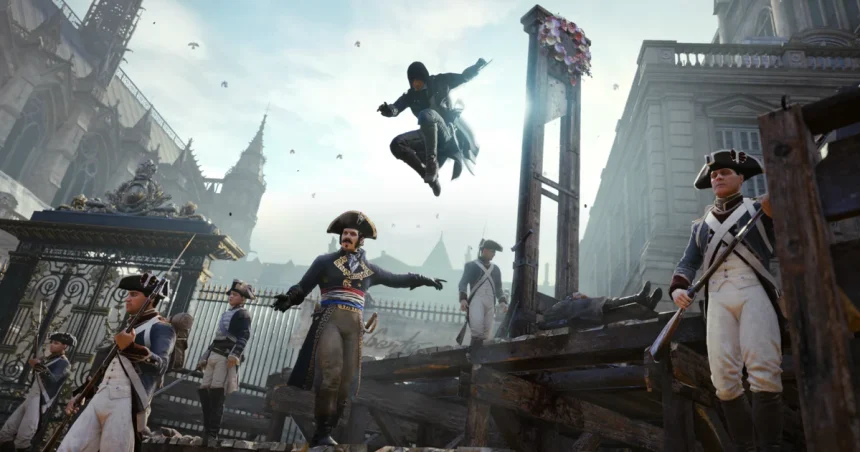
Amancio is currently senior vice-president of world-building and IP strategy at FunPlus, but previously he was the creative director of Assassin’s Creed: Revelations and Assassin’s Creed: Unity at Ubisoft, so he knows a thing or two about running huge productions with hundreds of people – and where things need to be improved.
Following his talk, GamesIndustry.biz caught up with Amancio to find out what he thinks needs to be done to solve the current crisis in AAA development.
So, how do you fix AAA development? What’s the secret?
I think the secret is asking the question.
I’ve had many discussions with many people across different scales of games and many different genres, and the thing that everybody agrees on is that making a game is tough. There’s a thing called the wicked problem that describes a kind of problem where there’s many different potential inputs, and what happens in the process is inherently variable. So when you actually solve that problem and have an output, it is mathematically impossible to backtrack and figure out whether the process was the most efficient one and whether you got the best result. Making a game falls into that category, and so it’s normal that we are constantly struggling.
The other thing is the word video game is a very broad term. It can cover anything from a mobile card game to a large open world. So I think that there’s different solutions for different scales and different types of games.
I think it’s more about finding choke points where you can collapse the complexity, and then having these floodgates that only let the flow go one way, and you make sure that you go through them very methodically.
You’ve worked on the Assassin’s Creed franchise, and I know there are hundreds of people working on each title in the series. Is there any way to avoid that? Do we always have to have so many people making each game?
I don’t think we do. And I don’t think it’s tenable.
There’s this theory that says that whenever humans create something that surpasses a hundred people, it completely changes the dynamic of it. As soon as you surpass that, the ratio of management to people working on the game explodes. You start having a very management-heavy structure: You need to have people to coordinate the people coordinating.
Something that a lot of AAA studios mistakenly do, or certainly did in the past, is think that you can solve a problem by throwing people at it. But adding people to a problem stagnates the people that were already being efficient on it. It just creates a lot of variable noise.
So I think the future lies in smaller teams. I think that there’s stuff we can learn from other industries. The film industry evolved into coalesced, core teams in which each person is responsible for putting together a crew to help them on that project. That crew typically is built for that project, it’s a temporary crew, although of course people get people that they want to work with long term: they have their go-to people for various kinds of projects.
“The gaming industry has treated itself as being part of the software industry, but it is kind of a weird hybrid”
Since its inception, I think that the gaming industry has treated itself as being part of the software industry, but it is kind of a weird hybrid. I think the future lies in taking that learning from the film industry, where you have core teams that are complimented with either outsourcing or with co-dev for specific needs. You get the right crew for the right project at the right time.
One of the biggest problems that we have – and this is inherent to making a game, especially if you want to innovate – is that you’re building stuff as you’re going along. This is where we diverge from the film industry, where you have a script, it’s solid, and then you just go and shoot it.
There’s stuff that evolves and fun that you’ll find that you need to follow. The best analogy that I can come up with is a train. The locomotive is the core team, and then you have different sections of the train that represent different trades. The problem is that each one wants to go at their own chosen speed. And so the locomotive is pushing in a certain direction at a certain speed, then you have each section trying to either go faster or brake – and then you’re stuck with that huge train that’s tearing itself apart. So the way I see the future is with a much leaner train: When you stop at a station, you pick up certain sections, you drop off other ones, and so forth, and I think that it becomes more manageable.
In terms of co-dev and outsourcing, how do you see that working? For example, we’ve got many co-dev studios in Canada and Europe, and we’ve also got more outsourcing-based studios who are mostly working on assets in places like the Philippines. What kind of mix do you see being used?
I think it really depends on the nature of the project. You might have a module of your game that is almost self-contained. Let’s say you’re working on the naval system on Assassin’s Creed: Black Flag. That’s an amazing feature you can give to a co-dev studio because it’s self-contained: with good direction, you can give the co-dev studio autonomy over making it as fun as possible, as long as all of the points where it connects with the main game remain stable.
I’m a very big fan of that, by the way. I like being very directive in explaining the constraints: what the shape of the box is, if you will. And then once that is clear, people can have full freedom to do what they want within the box.
I think that sometimes giving too much freedom at the beginning ends up hurting both parties, because then it feels like you’re trying to hit a dartboard in the dark. So I think that if that is done properly, I think it’s where the relationship works best, because when done right, the co-dev studio will even transcend the original mandate.
It’s interesting you mention freedom as almost being a negative – but I think we have seen games in the past which have perhaps come out of pre-production too quickly and then stalled in production because they’re not quite sure where they’re going. Have you experienced that?
I think everybody has in the industry. And again, it’s that train, right? “Well, we have all these people, we need to get them work” – and then you just get stuck into that kind of process.
Earlier I said that where our industry diverges from the film industry is that once you’ve got a script ready, you can start shooting. If we were to find an analogy for our industry, it would be a working prototype. I think it should be the golden rule that you come out of pre-production with something where, although everything might not be there, you have at least found the core of what you’re trying to do.
“Just repeating that vertical slice doesn’t guarantee the game will be good”
But then there’s also something else, and it goes back again to the fact that games are so different. Once you finish pre-production, you should have a vertical slice that gives you exactly what the experience is, but just repeating that vertical slice doesn’t guarantee the game will be good. When you put everything together, there’s kind of a flow to it that needs to be revised, which is why a lot of very big AAA games are ready and yet they’re not shipping. Once you have the game working end to end, there’s that macro experience that you need to validate.
But going back to pre-production, a vertical slice works well for a linear game, but what happens when you have a systemic game where you need to have all the systems – or at least the critical mass of systems – developed in order to get the feeling of the actual game? In order to do that, you actually have to build all the systems. So your vertical slice almost requires you to make a large part of the game itself.
You directed some really big games for Ubisoft. If you went back to, say, Assassin’s Creed: Unity now, what would you change? How would you approach it?
When we began making Unity, two games started emerging. One game was a traditional Assassin’s Creed game, with the main protagonist carving his path through the French Revolution, but we also wanted to make a co-op game.
We found a clever way of hiding a character creation system within Assassin’s Creed. Instead of having just one blood ancestor in the Animus, it’s a database of millions of people, and you’re searching for an ancestor. So the more you describe that ancestor, the more it reduces the search until you find a match.
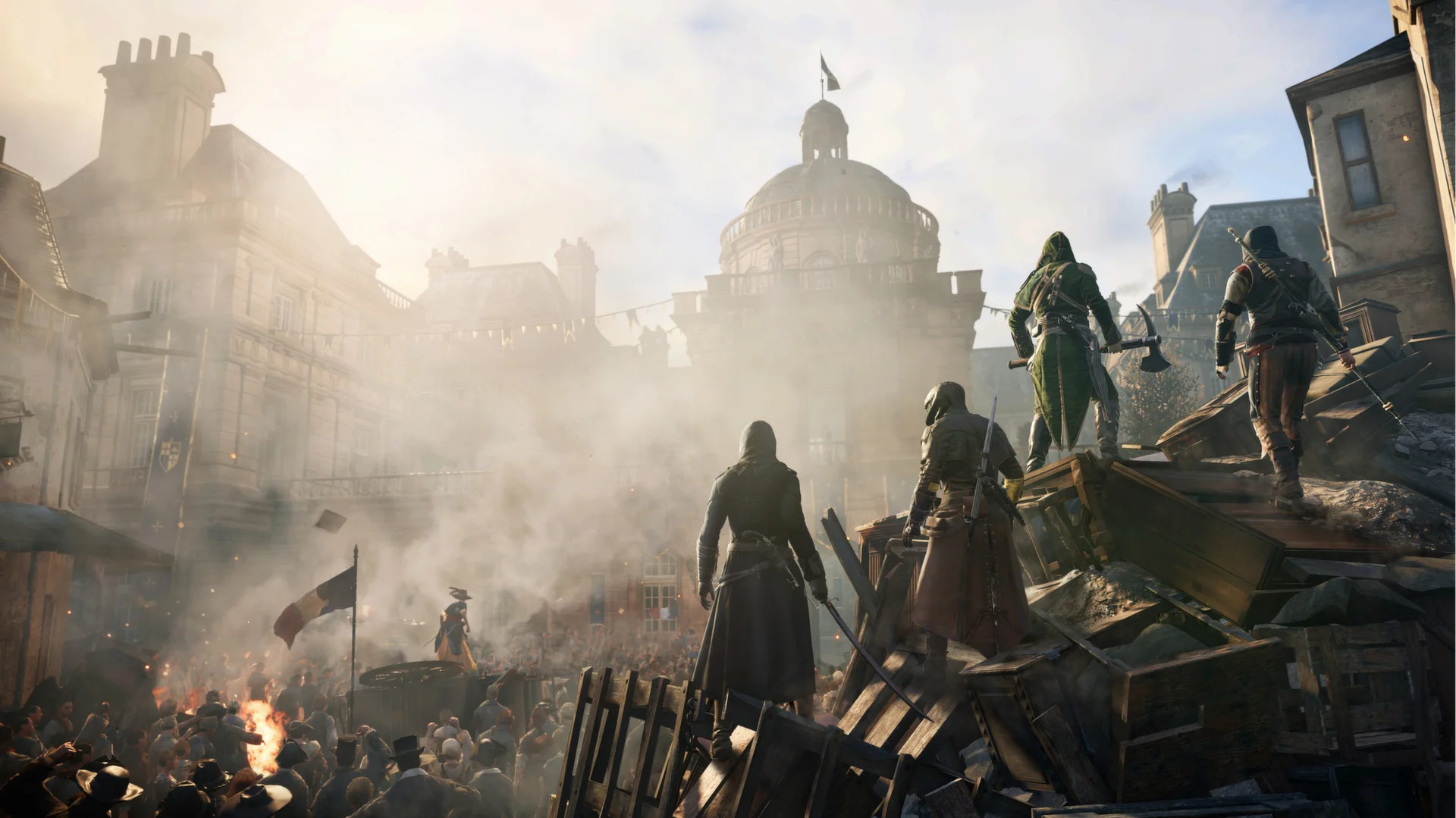
The French Revolution is such a complex mishmash of different events and different perspectives that it would have been a more accurate portrayal if, instead of having a linear adventure through the lens of one character, you got your own perspective of the revolution. So everyone’s experience through the game is their own path through a complex event.
At one point, we needed to choose to make one game or the other. Obviously these are huge investments with huge teams, so we made the decision to make the title that people would most recognize. But somewhere inside of me, I still wish we would’ve gone for that other one.
I started my career at Ubisoft on Far Cry, not on Assassin’s Creed, and I’m a huge fan of systemic games. I like simple, small systems that interact to create emergence. And Assassin’s Creed was always open world, but very much a directed game. I’ve always had this desire to inject a little bit more of that chaos into the game.
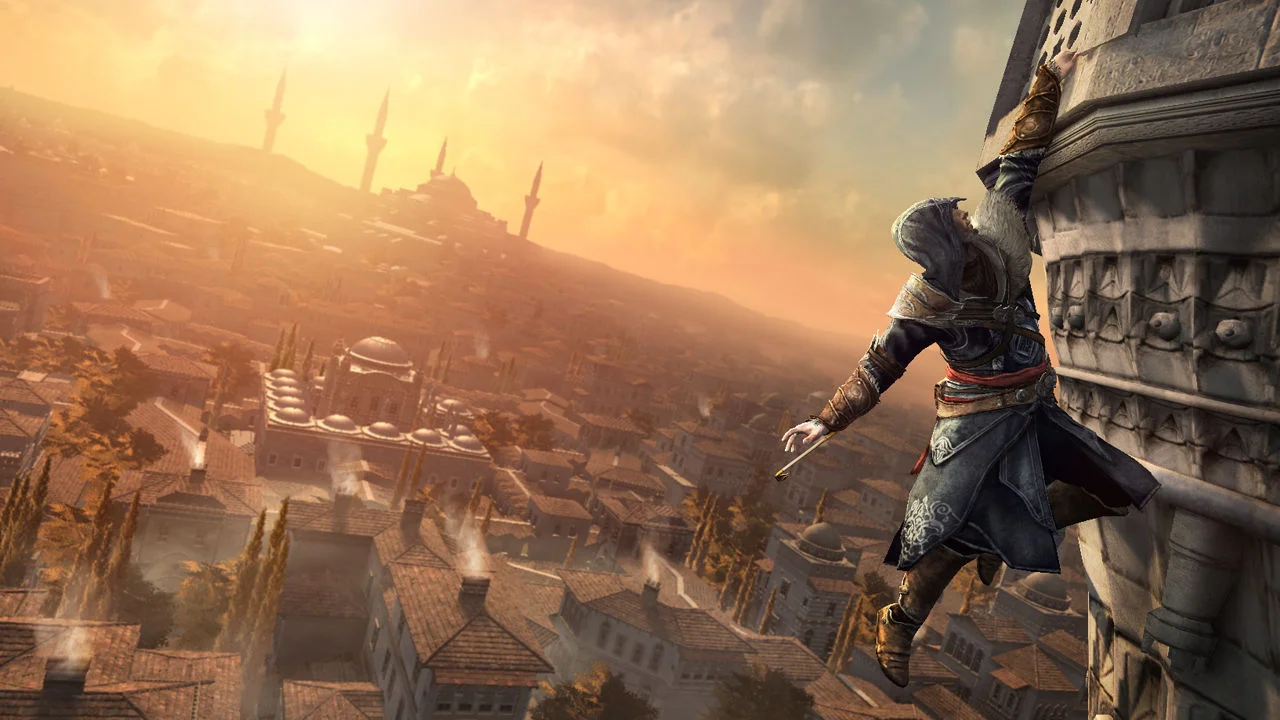
For example, adding the bomb system to Revelations was a way of exposing systems to the audience, because you could attract and disperse the crowd. It was a way of giving tools to players. These are the kinds of decisions that I think would have made – and still could make – Assassin’s Creed into a more, in my opinion, modern game.
It’s always a trade off, isn’t it. Unity famously had quite a few bugs at the start, and you were working on new consoles. I think the idea of doing what you’re describing, which would involve more divergent gameplay, would have taken much longer to make. That is the cost that would have come from that innovation.
Yeah. And we were also making the engine, and it was also the first time we were making a multiplayer Assassin’s Creed game. There was a multiplayer mode before, but that was a whole different game made by a different team. This was the first time that we really integrated the multiplayer element into the actual Assassin’s Creed game world.
It highlights another aspect of AAA development that we often see, which is feature creep. The idea that as you’re going along, someone has a great idea over the weekend: “Oh, let’s put that in.” Is that something to be fought against or embraced?
I think that it has to be filtered, and I’m honestly always open to ideas.
I’m a big fan of exposing the mechanics to people, the decision process that goes into making the game, because once you give those keys to everybody on the team, they filter out 90% of those good ideas that aren’t necessarily good for the game.
The way I always present it is like, “Here are the pillars of the project.” In the case of Assassin’s Creed, assassination, social stealth, and parkour, those are three core pillars, at least originally. They’re intertwined, which means that when you’re interacting with one, you can be interacting with all of them.
Any feature that is proposed should be overlapping with that core. The more it overlaps, the bigger the chance there is for that idea to make it into the product. The more divergent it is, the less it belongs in the product.
When you’re working on a project with a thousand people and everybody has ideas, it’s very frustrating when you have a creative director just shut you down without any kind of perceivable logic. So by showing people the logic, first of all people filter their own ideas out, and then when they actually make it to you, odds are those ideas are actually relevant and should be discussed. And then it becomes a question of impact versus time versus risk.
So in that sense, it’s important to have constraints – and in fact they can really help the project.
I think constraints are the secret behind any good art. And whether they’re artificial or they’re real constraints, they have to be imposed. Our brains are all pretty much structured the same, so given the same inputs, we’ll output similar ideas.
I think ideas are important, don’t get me wrong, but I think that most people have the same ideas for the same problems. It’s constraints that force you not to use that first idea. Sometimes it’s financial or it’s technical, but that forces you to find something different, and mastery and excellence exists in those decisions.
One of the biggest problems in AAA development is time – it takes years and years to make these huge games. Is there any solution to that? Is there a way to make games quicker?
I mean, there is if you’re not pushing for innovation. Let’s say a company creates the city of New York or London, and that becomes the stage. There’s a traffic system, there’s a crowd system – we create our own little Matrix bubble. And then we decide to create a detective game in that setting, or we decide to create some superhero game within that world.
Theoretically, we could do that – but there would be a lot of constraints. And those individual games might be very well crafted in terms of their narrative, in terms of the pacing, but would the audience think that we’re just repackaging the same assets and charging money for it?
There lies the problem: We always try to push the boundaries of what we do, and that means every time you change something substantially enough, a lot of systems that are dependent on that have to be redone from the ground up. You end up getting into, “Well, now we have to redo the traffic system. It’s going to take six months for it to even work.”
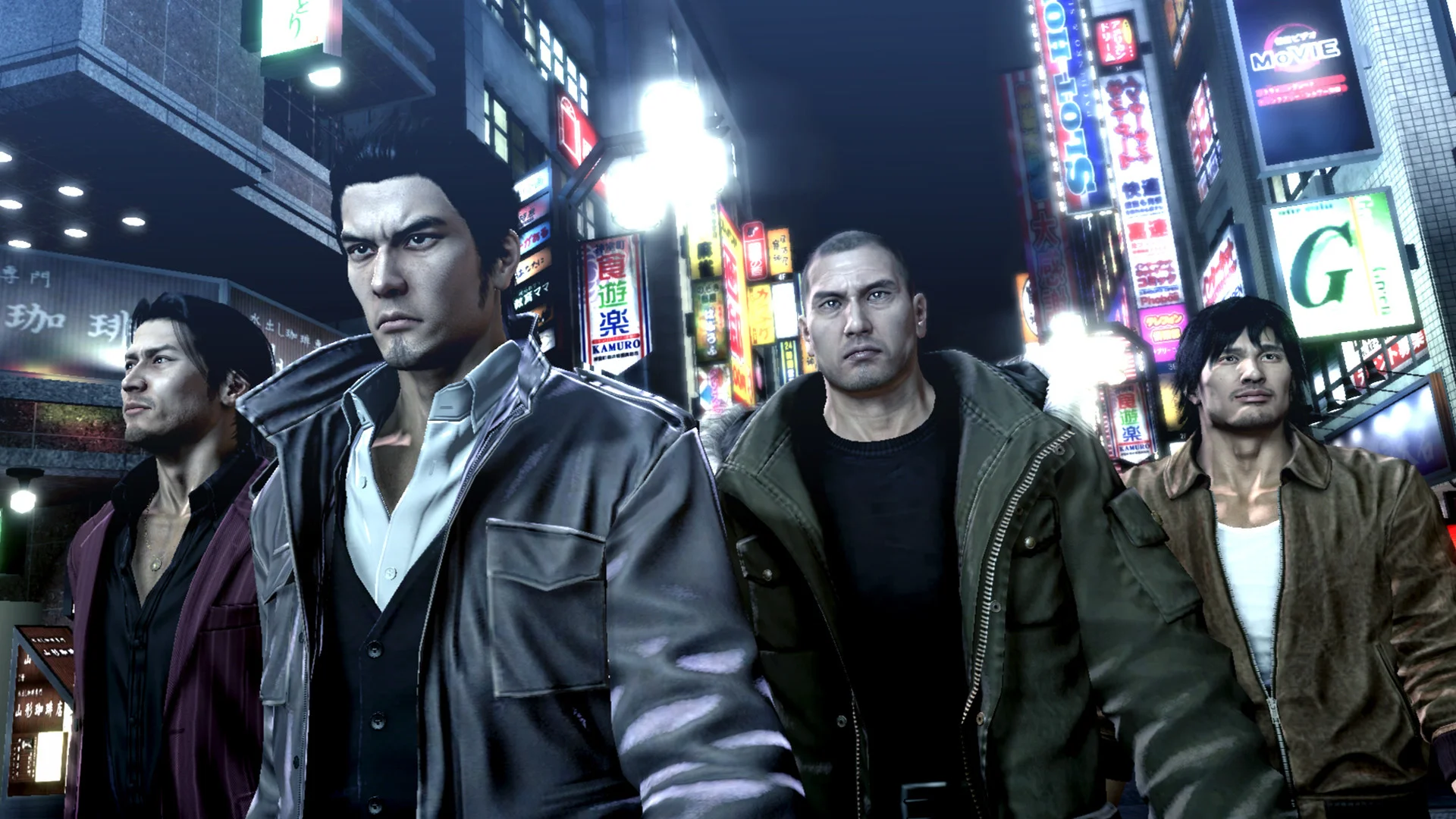
I suppose Like a Dragon is a good example of a series that has actually made reusing assets or locations a bonus in a way: people look forward to revisiting the same place. And it also enabled Ryu Ga Gotoku Studio to have a phenomenal rate of releases over the years. Is that something that could be applied to games like Assassin’s Creed, or is there always a need to have something completely new every time?
I would try it, especially if you’re honest with the audience in what you’re doing.
If we were to say, OK, let’s release a new Unity two years from now – and it’s obviously bug free, because the core is there, right? So we do Unity, same Paris – which still looks fantastic today – and we make that game that I was mentioning that’s more based on you carving your own path through the revolution, and you open that dialogue with people. It wouldn’t take a long time to figure out public sentiments and whether they’re open to studios doing stuff like that.
This interview has been edited for length and clarity.
Via: gamesindustry.biz