




Once upon a time, there was the MMO (Massively Multiplayer Online) Golden Age. During those years, some of the largest and most renowned gaming studios were willing to make massive investment bets in the development of new MMO games, easily justifying them with the genre’s burgeoning popularity.
After the pioneering times of classics like Ultima Online, EverQuest, and Dark Age of Camelot, it was the arrival of Blizzard’s World of Warcraft that truly turned the interest of many millions of players toward the genre. Until its launch, the most popular games had peaked at between 250,000 and 500,000 subscribers; World of Warcraft immediately attracted millions of fans, eventually reaching its peak of over 12 million subscribers in 2010, toward the end of the Wrath of the Lich King expansion.
Between 2005 and 2014, the release schedule saw the debut of many big-budget MMO games made by Western developers: The Matrix Online, The Lord of the Rings Online, Vanguard: Saga of Heroes, Age of Conan, Warhammer Online: Age of Reckoning, Champions Online, Star Trek Online, DC Universe Online, RIFT, Star Wars: The Old Republic, Guild Wars 2, The Secret World, Defiance, Neverwinter, Wildstar, and The Elder Scrolls Online.
These projects often leveraged massive entertainment franchises and large budgets to try to carve out a sizable slice of World of Warcraft’s dominant market share. RIFT, one of two games on this list that publicly reported having a peak subscriber base of over one million players at some point, reportedly cost $50 million to develop. The other game is Star Wars: The Old Republic, on which Electronic Arts is believed to have invested a budget of around $200 million between the license, highly expensive fully voiced questlines for each character class, and other expenses.
None of these games could quite replicate the level of success seen with World of Warcraft, though. While Guild Wars 2, The Elder Scrolls Online, and (to a lesser extent) Star Wars: The Old Republic and The Lord of the Rings Online are still going strong, Blizzard’s game remains the most popular Western MMO even twenty-one years after its release.
More to the point of this article, following that decade of unbridled investment, Western developers have started looking elsewhere to other genres. After The Elder Scrolls Online, it took seven years before another Western-made MMO launched into the market. I’m talking about New World, of course. It was the tip of the spear of Amazon’s investment into gaming; powered by a massive budget, the game’s mere existence drew the eyes of countless long-suffering fans of the genre who had been yearning to play a new triple-A MMO game for a very long time.
That led to an early success. The game neared a peak of one million concurrent players on Steam, causing long server queues and prompting even Amazon owner Jeff Bezos to congratulate the team. New World suffered from a severe lack of content, though, which soon meant players had little to do and stopped logging in.
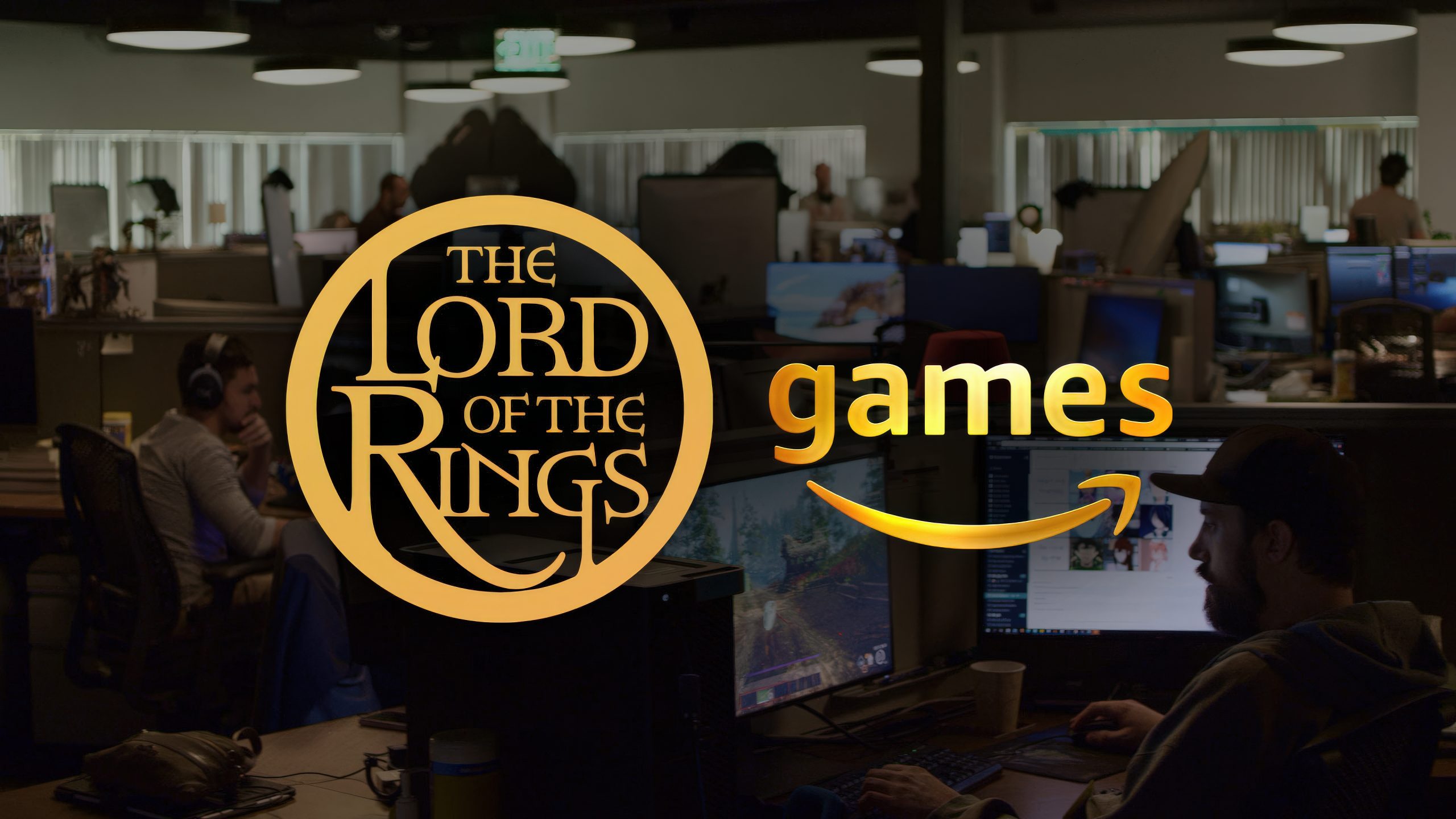
However, even before the launch of New World, Amazon already had another major project underway: a new MMO based on J.R.R. Tolkien’s The Lord of the Rings. This game, first announced in July 2019, was part of Amazon’s larger strategy on the IP: Bezos himself, a known fan of LOTR, had previously given Amazon Studios the mandate to acquire the television rights from the Tolkien Estate, which they successfully obtained in November 2017 (to eventually produce Rings of Power). Between the game and the Prime Video show, Amazon hoped to rival and potentially even exceed the Game of Thrones phenomenon.
From the point of view of MMO fans, a new LOTR game by Amazon seemed like the perfect combination to reignite interest in the genre. What better universe than the setting that defined Western fantasy, and what better developer than one with such wealthy coffers? While the 2007 game originally crafted by Turbine has a niche charm that still keeps it alive to this day thanks to its loyal fans, this new project’s potential was far grander, even if only to leave behind the dated tech that LOTRO is built upon.
Contractual disputes between Amazon and Tencent led to the cancellation of the project in April 2021, but that was not the end of the story. Two years later, Amazon was able to reach another agreement with the Embracer Group, restarting development on The Lord of the Rings MMO. At the time, Amazon Games VP Christoph Hartmann stated:
We’re determined to build the best possible The Lord of the Rings MMO and something that the franchise’s millions of fans all over the world will truly love.
The goal, they said, was to apply the lessons learned from New World to the new game. But a few weeks ago, Amazon closed down its internal studios, sunsetting New World (just when it was improving) and effectively cancelling LOTR, too. Just like that, once again, there is no publicly known triple-A Western MMO in development (with the exception of Riot’s project, which may or may not ever release, according to the developers themselves).
Die-hard aficionados of massively multiplayer online games took the news hard, and heated discussions surrounding the genre’s long-debated final demise, at least as far as Western developers are concerned, filled Reddit, social media, forums, and the like.
Shortly after the news, I started reaching out to several industry veterans to get their perspective on the real state of affairs. In this unique interview, you’ll read how each of them responds to the same questions, providing different viewpoints on the issues with their insights.
The first one is Greg Street. Street’s career in the gaming industry spans nearly thirty years; he has worked on several Age of Empires games, then moved to Blizzard, where he contributed to World of Warcraft at its peak, followed by work on League of Legends and a brief stint on the League of Legends MMO. More recently, he founded Fantastic Pixel Castle to make a new MMO codenamed Ghost, which I discussed with him exactly two years ago. However, after getting the initial funding from NetEase, the studio was recently shut down.
The second is Rich Vogel. A genre pioneer with his work on the very first 3D graphical MMORPG, Meridian 59, he later worked on Ultima Online, Star Wars Galaxies, Star Wars: The Old Republic, and, for a while, on the MMO-adjacent Fallout 76. Like Street, he founded a new studio, T-Minus Zero Entertainment, with the help of NetEase in 2023, when I interviewed him. Like Fantastic Pixel Castle, T-Minus Zero also got its funding cut, although a group of developers resurrected it.
The third one is Scott Hartsman, who worked as Technical Director on EverQuest I and II and later as Executive Producer on EverQuest II, although most people will know him as the General Manager and CEO of Trion Worlds, the company behind RIFT, Defiance, and other games. More recently, he has served as an advisor to multiple companies, including NCSOFT West. I’d like to thank them all for their willingness to chime in with their thoughts and analysis.

So, then you play this game of: if you don’t innovate enough, you won’t attract players who already have an MMO like WoW, Guild Wars, or Final Fantasy, let alone newer players who have rejected the genre as old and stuffy. But if you innovate too much, you may not appeal to the core MMO gamer, and there is no guarantee you will appeal to the newer gamer either.’
The news that Amazon has cut its entire MMO division, sunsetting New World and cancelling its upcoming project based on The Lord of the Rings, has been taken particularly badly by genre fans, who had hoped that the combination of a big-budget game and a beloved IP might spark a renaissance of sorts. Do you agree that it’s a bad omen, even for other industry players who might have been looking into making an MMORPG in the coming years? Are MMORPGs really dead in the Western world? If so, why, and what would it take to revive them?
Greg Street: I don’t think MMOs are dead in the West. It’s just a really challenging genre to fund, especially in this market where hardly any deals are getting made. Publishers love the thought of a steady income stream for a decade, but they get nervous about the cost to commit to a content-based live service game vs., say, a PvP game. (The PvP games flop all the time as well, but at least the live service commitment is lower.)
So, then you play this game of: if you don’t innovate enough, you won’t attract players who already have an MMO like WoW, Guild Wars, or Final Fantasy, let alone newer players who have rejected the genre as old and stuffy. But if you innovate too much, you may not appeal to the core MMO gamer, and there is no guarantee you will appeal to the newer gamer either. The basic problem is that it’s hard to start small with an MMO. You have to commit to a lot of systems and content to make it work. There are some notable exceptions, like Warframe, which started small and grew into an MMO.
Rich Vogel: Over the past few years (ed: following the overstaffing that occurred during the pandemic), the gaming industry has undergone a significant market correction, characterized by large layoffs and project cancellations. Amazon, like other game publishers, needs to evaluate its portfolio and manage its risks. MMORPGs are costly to develop, launch, and support. Their core development team is based in California, which is known as one of the most expensive places in the world for game development. Therefore, given current market conditions, I don’t see the cancellation of those MMORPGs as a bad sign. I see it as a strategic business decision to focus on other, less expensive projects with a lower ROI (return on investment) risk.
I don’t believe MMORPGs are dead. Several MMORPGs that were developed over 10 years ago still have large communities and maintain a solid, sustainable business model. Good examples include Destiny, Guild Wars, ESO, and Fallout 76. Classics like WOW and SWTOR still have active communities as well. A key reason for their ongoing success is that they have evolved. Destiny, for instance, introduced Strikes, which allow players to complete 20-minute missions and enjoy gaming with friends for short periods, rather than the major time sinks required to keep up with others. Fallout 76 is another great example; it has become much easier to play and progress with friends. The team transformed the game from its original version, which felt like an abandoned world (no NPCs), to what players expected a Fallout game to be (filled with NPCs with quirky dialogue). The TV series also significantly boosted the player base. Now, Fallout 76 is embracing the series and adding similar content to the game. I believe that players will come if an MMORPG is easy to get into, designed as a mid-core game, and offers fun gameplay that does not require a huge time investment.
Look at the recent launch of Dune: Awakening. It attracted many players to try it, but it could not maintain its original player numbers because it was hardcore in terms of PVP and required a significant time investment. In my opinion, it is a hardcore game that heavily draws on the legacy of Anarchy Online, which caused substantial churn in the first six months after launch. But even that game has a solid core base to sustain itself. Many players who previously played RUST are still playing the game.
Scott Hartsman: Withdrawals and shutdowns like that are certainly not a sign of anything good, and I do know a number of very solid folks over there whose game I would have loved to have seen come out. That said, I wouldn’t read too much into it industry-wide. It’s really hard to make an MMO or live games focused business scale to the level that it would have had to be in order to be considered a big hit at Amazon Scale. I think you’d most likely have to hit a WoW or LoL level of success to hit that bar. As an industry, if you include all live games, we make about one generational success every 18 months. When their initial games didn’t hit that bar, and they didn’t see a clear path to that world, we get what just happened. I don’t think we should take it as an indicator of anything bad for the kinds of companies that have realistic expectations of what success means in our corner of games.
What we’re seeing is more of what you’d call a reversion to the mean, in an environment where the most popular massive and live games being played average 10-13 years old. There’s already a ton to play, in a world where these games just don’t ever end, and people are still loving games that have existed for a long time. Smaller teams (independent and mid-size) getting entertaining and novel games, being able to take risks — That’s the kind of thing that’s going to continue to thrive. It’s not that the genre is dead or failing; it’s that what success looks like has changed over the years. And the ones pursuing the old definition (massive money in, massive money required out) are going to keep getting bitten.
Asian developers, who continue to invest in the genre, often launch their MMOs on mobile platforms as well. Considering that the mobile segment is the only one showing actual growth in the industry, is that a necessary compromise for big studios to make if they want to invest in a triple-A experience?
Greg Street: I am more familiar with the market in China than elsewhere in Asia, but they are also worried about player fatigue on MMOs. They still launch more of them than publishers in the West do, but they have been declining (even if gaming as a whole is growing), and there have also been some spectacular failures. Korean publishers still seem to be interested in MMOs, though they are tightening their belts like everyone.
Rich Vogel: Mobile games in Asia have surpassed PC games in popularity. Most of these titles attract a mid-core audience. I believe that with the latest phones and the shift of console manufacturers toward creating mobile gaming systems, we will see an increase in mobile gaming. This presents a great opportunity for developers to focus on creating multiplayer games for mobile. While Asia has a head start in developing mid-core mobile games, I believe the West will catch up before the end of this decade. I see developers creating AA and AAA mid-core games for all platforms, enabling cross-platform play. I don’t see developers focusing solely on PC and console games in the future. Therefore, I can easily imagine developers making MMORPG-lite games for all platforms that appeal to mid-core players.
Scott Hartsman: I do agree that having some extra advantage is a strategy that’d be wise if someone’s going in big like the old ways. Whether that’s mobile, simultaneous global on all possible platforms, or some other big lever — Having something that potentially impactful would certainly be important.

Outside of MMORPGs, gamers have been getting more accustomed lately to harsh experiences where you die a lot (Soulslike games) and even possibly lose your hard-earned loot (extraction games). Could that pave the way for more sandbox MMO-like experiences, loosely inspired by Ultima Online and its ilk, which would place less focus on expensive cinematics and storylines and more on emergent, player-driven content? There is one game that has had some success in this niche, albeit on a small scale: Albion Online. Do you think it could be replicated on a larger scale?
Greg Street: I agree that if MMOs aren’t challenging enough, there is less satisfaction in playing and certainly less need to cooperate with other players. I don’t personally think pure sandbox is the answer, or you would see the modern attempts be super successful. Too often, the sandbox experience is conflated with either PvP or “go find your own fun.” I think the way forward is a hybrid, where you still give players direction and a story, but it requires more strategy on the part of the player than just grinding instances that they have all memorized or doing the same daily quests over and over.
Rich Vogel: Those games-as-a-service games, like Battlefield 6 and Arc Raiders, are PvP games. They hit a different target audience than MMORPGs. PVP players are tolerant of hardcore mechanics. I believe that games with open-world PVE sandboxes that are heavily system-based and provide more emergent player-driven content are more engaging. I envision a bright future for developers creating a lightweight MMORPG targeting a mid-core audience, featuring an open-world and system-driven design that spans all platforms. I believe a well-made fantasy MMORPG that isn’t too hardcore and targets a midcore player base could catch up if it can scale in players and content.
Scott Hartsman: Absolutely. The original sandboxes were well ahead of their time in a lot of ways. Not entirely unlike the way D&D and Magic: TG started out as these niche, nerdy hobbies. Over time, more people get on board with those kinds of experiences. Sandboxes are an entirely different kind of experience, but I’d say they’re on a similar track. Theme parks introduced a massive number of people to MMOs and live games in general. Globally playing with friends and making new ones across the world used to be this freakish thing only for the hardest of the hardcore. Now it’s just called “games.” The step that comes after that is more freedom, more variety. Sandboxes and survival are a huge fit there. More people are absolutely getting more interested in that, as we’ve seen over the past half-decade or so, both as players and developers, especially across the indie and AA scene.
I’m not an Albion Online expert, but they’re clearly succeeding in a niche, and that’s fantastic. To me, that’s an exciting part of how MMOs have evolved: if you can find a niche and serve it well, you can have a healthy business that runs potentially forever, which is great for both players and developers.

Do you believe there are still enough players potentially interested in an MMORPG, or is that just a pipe dream, given that the older generation has way less time and the new generation is taken in by other genres?
Greg Street: Our data suggests that Western players are very interested in trying new MMOs, and if you look at some of the launches in the past 5 years, they do try them out. They just don’t stick with them long if there isn’t enough content, especially at the endgame.
Rich Vogel: Yes, I believe a large audience is waiting for the right MMORPG to emerge. Consider the millions of players who have played and continue to play WOW, SWTOR, ESO, UO, EverQuest, Fallout 76, and others. The problem is that no publisher is willing to invest the money and take the risk at this time. My instinct tells me that the next major MMORPG will likely come from Asia and/or Europe. If what I have been hearing about GTA 6’s features and gameplay is true, it could evolve into an MMORPG, as many of its planned features are typically found in MMORPGs.
Scott Hartsman: I think it’s not as much about having less time, it’s more about giving people more control over their time. It’s a similar dynamic to what you see with streaming: watch an 8-hour movie? Are you crazy? Watch 16 half-hour episodes in a row? Absolutely! We need to adapt to what people want to engage with.
Contrast that with the original MMOs: a 4-8 hour dungeon crawl, sitting in one place, waiting 15-20 minutes at a time for respawns? Sure, some people might still enjoy that. But that number only goes down over time. Not the number who are interested in being entertained. It’s one of the reasons that you see Path of Exile continuing to grow and hit new records a decade after launch, while more classic MMOs stagnated. It did that even with a relatively harsh loss penalty (especially if you’re casual). People are okay with challenge, they’re even okay with loss, and it turns out they’re also phenomenally okay with grinding and random chances on loot. Some of them are even okay with permadeath. A lot of those elements overlap with the harshest of MMOs. People just want the package those elements are wrapped up into to be more aligned with how they’re looking to experience them.
It’s on us to figure out how to deliver the kind of entertainment that an audience large enough to sustain us is looking to play. In some cases, that may mean finding a way to succeed with a smaller audience (i.e. Niche Worlds Cult’s Monsters & Memories). In other cases, it may mean adapting the definition of what an MMO is and how we choose to express our worlds and systems. I don’t think that’s bad for MMOs at all. It’s all about finding our players and serving them. After all, they’re the ones we’re doing this all for.
Thank you all so much for your time.
Follow Wccftech on Google to get more of our news coverage in your feeds.
VIA: wccftech.com