


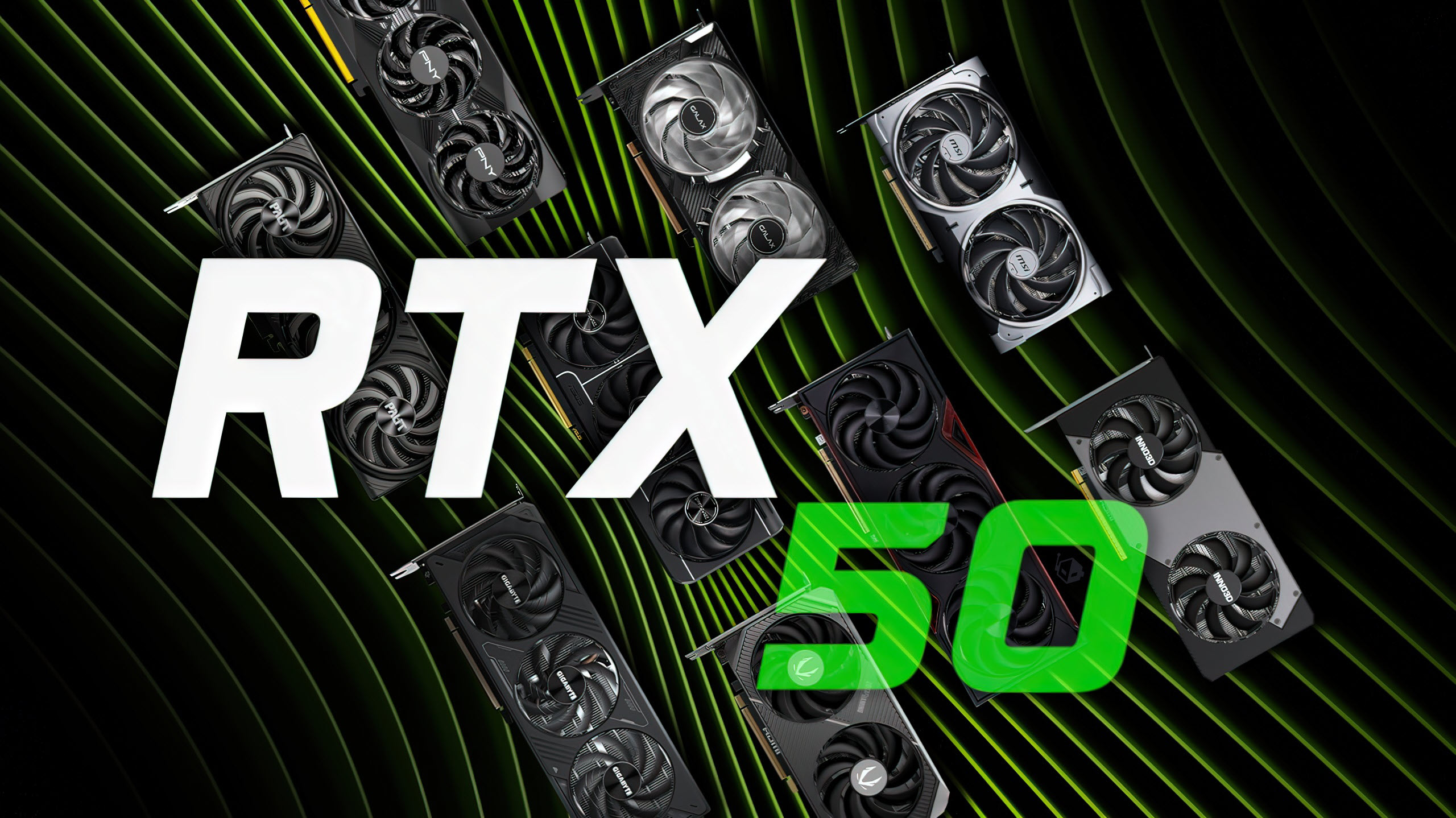
There have been a lot of rumors floating around NVIDIA’s RTX 50 GPUs and how memory shortages are impacting the supply/prices, and we thought we should do a detailed report on our findings, which paints a whole different picture of the ongoing situation.
Is NVIDIA Canning GeForce RTX 50 GPUs In Light of The Recent Memory Shortages? Here’s What Our Sources Tell Us
Since November, when the memory crisis started to creep in on the consumer hardware segment, there have been various reports highlighting that GPU vendors, both NVIDIA & AMD, will increase prices, and more recently, there have been reports that NVIDIA will be entirely ending production of certain GPUs in its inventory.
We went over and asked around some reputable industry sources on the matter, sources close to NVIDIA, sources close to their AICs, and sources at various AICs. Our findings have brought us more information on the matter, and while the memory shortage’s impact is real and affecting the entire consumer market, most information is either not passed properly or has been presented in a way that’s completely devoid of the truth. So here’s what we were able to get, and bear with us, the report will tackle various aspects of the consumer GPU market, particularly NVIDIA GPUs.
NVIDIA’s Official Statement – Strong Demand in a Memory-Constrained Ecosystem
First and foremost, we have to mention NVIDIA’s most recent and official statement that was provided to us just in time when we were preparing this report. The report aligns with what most AICs & partners are saying, which is that the demand for GeForce RTX 50 GPUs remains strong despite the prices going up. In Q4, NVIDIA’s GeForce RTX GPUs had strong sales, and the Deals Season (Black Friday, etc), prompted a buying spree amongst gamers and consumers.
There was an extra bit of push from consumers in getting these cards because of some factors besides the forthcoming memory crisis, such as Tarriffs. Yeah, we all thought at a certain point that tariffs would be the end of the consumer gaming segment, and this is also reflected in the recent report presented by IDC, where Q4 2025 saw a big growth in the PC market. But enter memory shortages, that’s just a whole new level of misery, and there’s little that consumers can do to avert it.
NVIDIA confirms that memory supply is constrained in its official statement, but despite that, it is working closely with its suppliers to maximize memory availability. NVIDIA also confirms that they continue to ship all GeForce SKUs. These two statements will be covered in detail later on in this post, but for now, let’s list down NVIDIA’s official statement.
Demand for GeForce RTX GPUs is strong, and memory supply is constrained. We continue to ship all GeForce SKUs and are working closely with our suppliers to maximize memory availability.
NVIDIA to Wccftech
Both GDDR6 and GDDR7 Memory Supply Is Constrained
Continuing our report, we thought about clarifying what we mean by memory shortages. We have seen DDR5 getting expensive, DDR4 is following suit, and the most recent reports suggest that DDR3 prices are on the rise. Surely our gaming graphics cards don’t use these memory standards, so why do GPU makers say that memory supply is constrained?
To answer it simply, it’s not that a singular memory type is experiencing shortages, but it is the entire memory industry. DRAM, or memory as we call it, is made for several products and several platforms. Computers use DDR standards for PCs and Data Centers, Graphics Cards use GDDR, and HPC/AI chips associate the HBM memory standards with them.
There are a handful of major companies that produce DRAM itself; the most widely known are Samsung, SK hynix, and Micron. These three are responsible for the bulk of the DRAM output on the global stage & considering how huge they are, each of them has dedicated fabs and production plants where these memory chips are made. But as demand for a certain memory rises, the production lines are prioritized for that DRAM.
Currently, HBM and DDR are the most utilized DRAM products due to the rising AI demand. Data Centers and AI powerhouses are gobbling these memory types like nothing, and major companies have already back-ordered years’ worth of supply, which is what these DRAM manufacturers are currently working to fulfill. GDDR for graphics cards and GPUs is also being produced, but not at the same level as the other two memory types, and that’s what is causing the memory shortages to occur. At the same time, prices to procure such memory also go up, and the usual supply/demand logic applies here.
So it’s not like only GDDR7 graphics cards, such as the RTX 50 series, will be expensive; even older GDDR6 graphics cards are going to be expensive, as the memory prices have shot up. But there’s some good news on this matter.
Gaming GPUs Prices Are Affected By Memory Cost Increases
One thing that our sources wanted to point out from the start is that NVIDIA has held off on passing through any memory cost increases to their AICs and consumers longer than other brands.
NVIDIA held off passing through any memory cost increases longer than most companies.
Industry Source to Wccftech
As we stated above, memory prices have gone up due to supply constraints, but despite that, it looks like NVIDIA has gone in favor of its customers and has limited the amount of memory costs passed over to consumer-centric GPUs.
Not all of the memory costs increases are being passed through to partners and end users.
Industry Source to Wccftech
The source also pointed out that they have received word on the memory price increases for GPUs, & they are in fact lower than what most have been quoting online. You can recall our month-old post where some channels highlighted $20-$40 US hikes with bumps throughout 2026.
And even if NVIDIA were to purchase memory from DRAM manufacturers for its GPU at exorbitant prices, there’s still the demand for RTX 50 GPUs, and that sort of supply is currently not available for the latest gaming graphics cards. That leads to an overall shortage of the output of consumer graphics cards, and as a result, consumers are left with no option but to pay higher prices.
They (NVIDIA) are not passing through all memory cost increases to partners, but memory supply is causing the constraints.
Industry Source to Wccftech
Is NVIDIA Cutting Off GPU+Memory Bundles To AICs?
Another story on the same matter related to AICs that had appeared recently said that NVIDIA has cut off its GPU+DRAM bundles to AICs, making AICs procure memory for each GPU themselves. Like AMD & Intel, NVIDIA provides its partners with a GPU+DRAM combo.
So let’s say an AIB asks 100 units of the GeForce RTX 5060 GPU from one of NVIDIA’s distributors. The AIC will receive two things: the GPU or chip used in the RTX 5060 graphics card, and the DRAM modules. It’s been the case since forever. The AIC will then produce a PCB that aligns with NVIDIA’s guidance spec and do the final retrofitting, inspection, validation, and packaging before sending it to their warehouse, where it’ll be shipped to retail distributors in mass quantities.
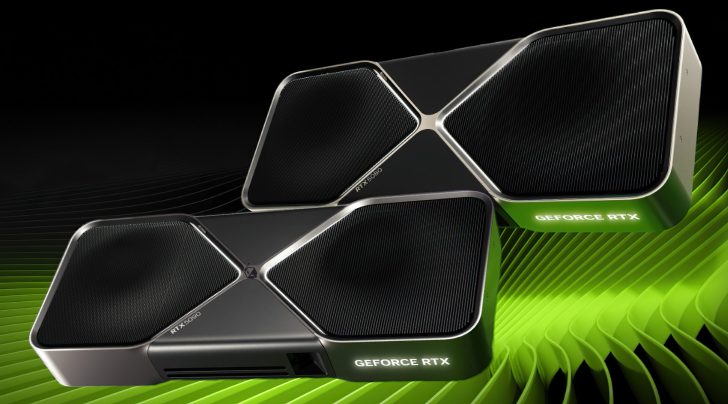
To answer this story, we can confirm with our industry sources that this story was fortunately false, and there have been no major changes in how NVIDIA manages DRAM supply with its partners (AICs). They still receive the aforementioned GPU+DRAM combo.
No. There have been no major changes in how NVIDIA manages memory with its customers.
Industry Source to Wccftech
No GPUs Are Being EOL’d, & No 16 GB Or Higher VRAM Models Are Being Axed
Now, coming to the main question, and something that was reported recently. But first of all, let me make this clear: all journalists and tech outlets do their best in sourcing their information, and present it in the best way possible to their readers. Every one of us is responsible for presenting facts as they are, and not a matter of distrust or controversy. This is why everything you hear on the web, from reputable outlets, has its weight. But oftentimes, it’s not the outlet itself, but the source or means through which that information was gathered, that causes some discrepancy.
We are talking about ASUS’s recent comment on the RTX 5070 Ti being EOL’d. This was covered by Hardware Unboxed, who are highly reputable and I have great respect for them, for what they do, and how they present their data. Surely, if someone at ASUS tells me that a certain GPU is being EOL’d, I’d take their word because they are one if not the biggest, NVIDIA AIC partners out there. And the intention of the report was right, but it looks like ASUS was wrong in one thing, and that the RTX 5070 Ti is not EOL.
There have been reports in the past, too, about the 5090 being EOL, the 5080 being EOL. It’s almost like the past few months, all RTX 50 cards have been declared EOL by someone, and this time, it was ASUS. The thing is, no card is being EOL’d; they are still up there on retail, sometimes out of stock, and sometimes back in stock at exorbitant prices, and sometimes below MSRP (though these days you’ll be lucky to find one within a $100 range of the MSRP).
All RTX 50 VRAM Models Continue To Be In Production
When talking to our industry source and the respective AICs, we confirmed that NVIDIA is not ending shipment of any said GPUs to them, and that they continue to supply all RTX 50 GPUs. All of these GPUs are still in production, and none of the GPUs is being prioritized over another, nor is a certain VRAM config being favored over another.
All 8 GB, 12 GB, 16 GB, and 32 GB models within the existing RTX 50 series see continued supply. The source even wanted to quote NVIDIA directly in saying that “They support every market segment”.
We cannot ignore the fact that there will be a certain level of supply drop to AICs based on memory supply as we reported earlier, but all things our source points us to is that NVIDIA won’t outright EOL any of their cards, nor have they done so for any RTX 50 GPU at the moment.
Certain cards will be more popular than others, and certain cards have always been produced in higher quantities than others. For example, the 5090, being the flagship, won’t have the same supply output as the RTX 5050, 5060, or 5070, nor will the 5070 Ti, a very popular option, have the same production level as the RTX 5060 series. So it going out of stock when the supply constraints are affecting literally everyone is to be expected, and if they aren’t showing up on a certain retailer, then it’s not because they are EOL, but it’s simply ran out of stock.
We see this happen even during the launch period, where a certain supply is allocated for the first few weeks, and retailers have to put up “Out of Stock” once the supply dries up. That doesn’t mean that GPU makers are EOL’ing their cards just a few days after launch. Same has happened with the Founders Edition models which have always been a limited production. As soon as these models are out of stock, the first thing you’ll see pop up is that NVIDIA has EOL’d the entire series.
NVIDIA GeForce RTX 50 GPU Prices (Newegg):
| GPU Name | MSRP | Lowest Price (1/13/26) | Highest Price (1/13/26) |
|---|---|---|---|
| RTX 5090 32 GB | $1999 US | $3741 (Windforce OC) | $8999 (Astral Dahab) |
| RTX 5080 16 GB | $999 US | $1214 (MSI Shadow) | $3299 (ROG Astral) |
| RTX 5070 Ti 16 GB | $749 US | $829 (Windforce) | $1799 (ROG STRIX) |
| RTX 5070 12 GB | $549 US | $549 (MSI Shadow) | $1299 (ROG STRIX) |
| RTX 5060 Ti 16 GB | $429 US | $459 (Eagle OC) | $899 (TUF Gaming) |
| RTX 5060 Ti 8 GB | $379 US | $369 (MSI Shadow) | $859 (ASUS TX Hastune) |
| RTX 5060 8 GB | $299 US | $299 (MSI Shadow) | $588 (PNY Dual) |
| RTX 5050 8 GB | $249 US | $259 (Gigabyte LP) | $466 (ASUS Dual) |
NVIDIA GeForce RTX 50 GPU Prices (Amazon):
| GPU Name | MSRP | Lowest Price (1/13/26) | Highest Price (1/13/26) |
|---|---|---|---|
| RTX 5090 32 GB | $1999 US | $3399 (Gaming OC) | $8389 (Inno3D X3 OC) |
| RTX 5080 16 GB | $999 US | $1299 (ASUS Prime) | $3589 (Amp Extreme) |
| RTX 5070 Ti 16 GB | $749 US | $829 (MSI Ventus 3X) | $3296 (AORUS Master) |
| RTX 5070 12 GB | $549 US | $519 (PNY Triple OC) | $1910 (ROG STRIX) |
| RTX 5060 Ti 16 GB | $429 US | $462 (Gigabyte Aero) | $1394 (ASUS Dual) |
| RTX 5060 Ti 8 GB | $379 US | $349 (PNY Dual OC) | $1079 (Eagle OC) |
| RTX 5060 8 GB | $299 US | $259 (Windforce OC) | $1148 (ASUS LP) |
| RTX 5050 8 GB | $249 US | $239 (MSI Shadow) | $645 (Inno3D Twin X2) |
ASUS Clarifies That No RTX 50 GPU Has Been EOL’d
And just as we were about to publish our report, ASUS issued another statement in which they confirm what our source just said, which confirms that their representative passed on incorrect information, and none of the RTX 50 cards they mentioned during the CES tradeshow to media have been EOL’d. The full statement is as follows:
We would like to clarify recent reports regarding the ASUS GeForce RTX™ 5070 Ti and RTX™ 5060 Ti 16 GB. Certain media may have received incomplete information from an ASUS PR representative regarding these products.
The GeForce RTX 5070 Ti and GeForce RTX 5060 Ti 16 GB have not been discontinued or designated as end-of-life (EOL). ASUS has no plans to stop selling these models.
Current fluctuations in supply for both products are primarily due to memory supply constraints, which have temporarily affected production output and restocking cycles. As a result, availability may appear limited in certain markets, but this should not be interpreted as a production halt or product retirement.
ASUS will continue to support the GeForce RTX 5070 Ti and RTX 5060 Ti 16 GB and is working closely with partners to stabilize supply as conditions improve.
Similar rumors also popped up a few months back stating that the RTX 5090 had been EOL’d however, at CES, MSI, ASUS, and Gigabyte unveiled new in-production and retail ready designs. If the card was really EOL, then why would manufacturers still produce more custom designs for it?
So that gives you an idea that most of the information being shared on the rumor mill, or by companies themselves, as big as ASUS, isn’t based on hard facts of what’s really going on in the industry right now, and that’s why we had multiple pointers and sources within this post that reflect that actual situation & what consumers should expect.
Hardware Unboxed has provided its own timeline on the matter:


With that said, that’s about what we were able to get out for now, and hopefully, this report answers a few questions regarding the current state of NVIDIA’s RTX 50 GPUs and their gaming lineup in general, while also addressing some rumors out on the web.
Follow Wccftech on Google to get more of our news coverage in your feeds.
VIA: wccftech.com