

Adrian Chmielarz co-founded the Warsaw-based studio People Can Fly back in 2002, working on titles like Painkiller, Bulletstorm, and Gears of War: Judgment. Then in 2012 he co-founded The Astronauts, which went on to release The Vanishing of Ethan Carter in 2014.
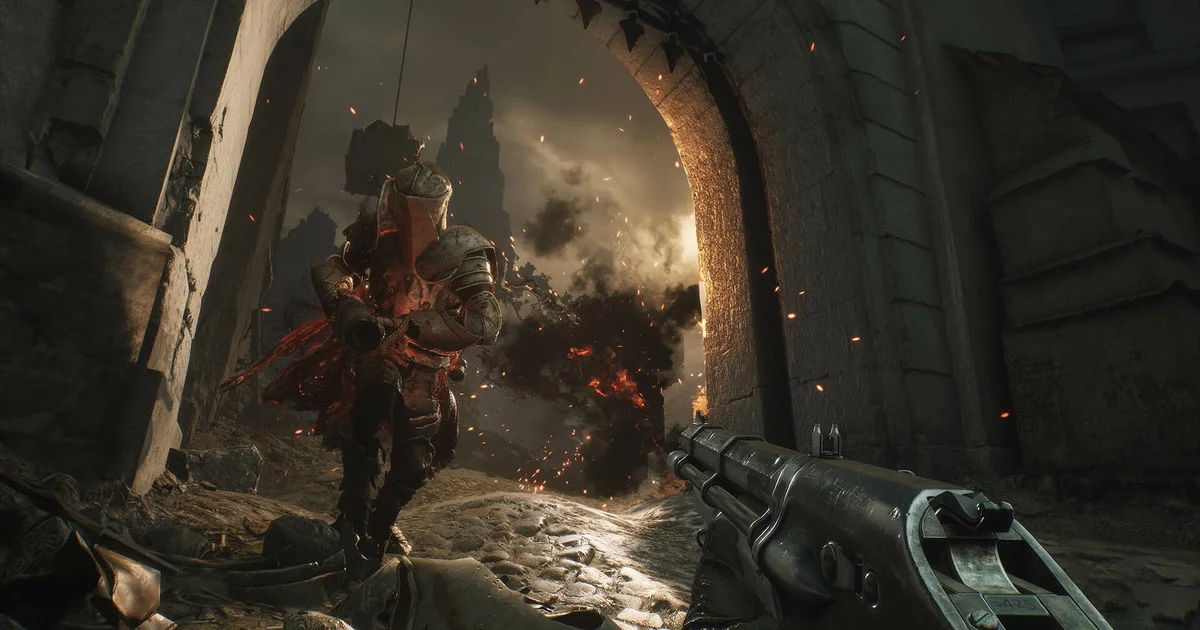
The second game from The Astronauts is Witchfire, a dark fantasy RPG shooter that entered Early Access in 2024 and is now nearing its 1.0 release. Ahead of that, GamesIndustry.biz sat down with Chmielarz to discuss Witchfire’s lengthy development process, as well as the advantages of working in small teams, the lessons learned from Clair Obscur: Expedition 33, and his worries around extraction shooters.
How long has Witchfire been in the works?
Witchfire was started in 2017. We started making a new project in 2015 [after Ethan Carter], which was a science-fiction survival simulator – which somehow evolved into a dark fantasy RPG shooter. In the middle of 2017, we said, “Okay, look, we really like shooting demons in the head, let’s do that, this is in our DNA.” So when it releases, it’s going to be nine years.
Witchfire has already sold over 500,000 copies in Early Access and amassed more than 1.6 million wishlists: How have you managed to attract so many players?
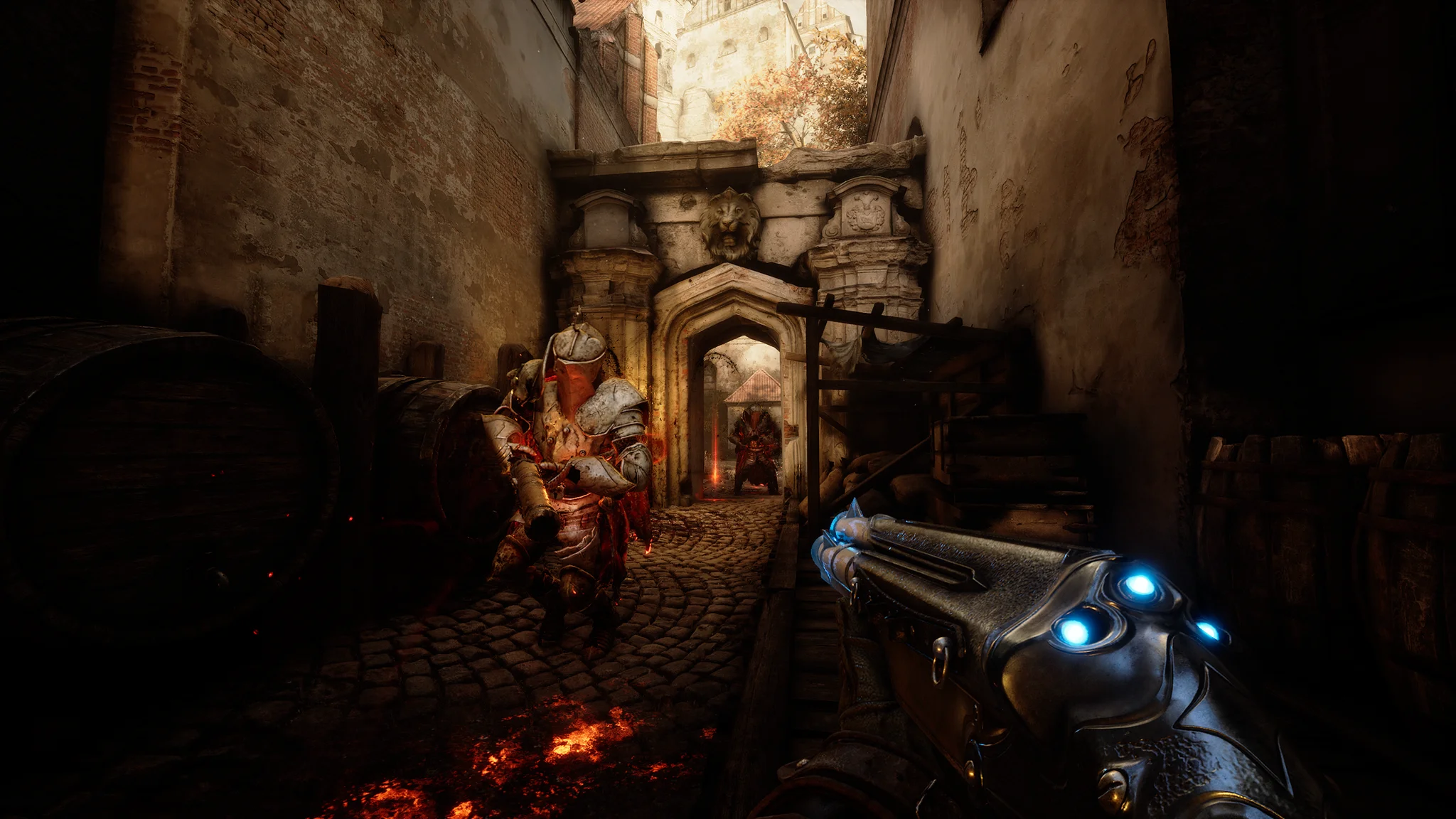
I don’t think it’s one thing, but it starts with: this is Dark Souls with guns. And I think that a lot of people just wanted this for a long time.
The other thing must be visuals. For Ethan Carter, we marketed it by mentioning photogrammetry. There’s something that is still magic to me [about photogrammetry]: you take a lot of photos of the object, put it into the software, and it spits out a game-ready object. It’s not as simple as this, but that’s the gist of it.
So we marketed the game by showing how we used photogrammetry, and our internal motto was ‘come for the graphics, but stay for the story’. And I think in the case of Witchfire, players come for the graphics, but stay for the gameplay. The story will be added too, but for now it’s mostly the gameplay.
And the third thing is, I think I’ve managed to organize a team that is pure talent, passion, and experience. Experience is the least important thing for me, but passion and talent is extremely important.
When you have a team that is confident, it’s a death of ego – which is very useful for game making, because you are very open to criticizing each other. And when you see a critique of your work, you understand it’s not anything against you, because everybody on the team understands you’re really good at your job, but you’re not perfect and you make mistakes.
So because it’s an egoless process, you think about this particular critique in a different light, and we can be much more honest during our development of the game.
One of the key things about Witchfire is you’ve got a very small team. I think it’s 27 full-time employees, is that right?
It’s 26 or 27. I think it’s 26, but it doesn’t make much of a difference, it’s still a relatively small team. And it’s worth mentioning that we only grew to this size in the last two years. For most of the development, we were only 12 people, and we were able to grow because of the sales.
Team size is something that a lot of people are talking about in the industry. We had a feature recently where the director of Assassins Creed Unity was saying that the “future lies in smaller teams.” I’m wondering whether a team of around 30 is the ideal size – because we had a similarly sized team for Clair Obscur, and No Law, the new game from Neon Giant, is also being made by around 30 people. Do you think that’s the sweet spot?
I went to a developers conference in Poland, and I met with a lot of friends who are owners of small studios or CEOs of gigantic ones, and I asked every single one of them exactly this question: “What do you think is the magic number?” And every single answer was different. It went from 25 to 100.
For me, the number doesn’t matter – but when you stop recognizing people, this is when you’ve grown too big. I remember at People Can Fly, when we were 60-something [people], I still recognized everybody, and there was a connection there. But we kept growing, and one day I saw a guy in the studio and I realized I didn’t know whether he was a guest or a newly hired developer – and he was actually a developer. That’s when I realized something was changing.
Obviously you can thrive as a giant studio. I don’t think Naughty Dog is very small, for example, and CD Projekt, they have large teams. But I do agree that there is something special when you have a team where everybody is still mentally connected.
What is that special thing? Is it about the speed of decision-making, for example?
Well, when we started The Astronauts, we said to ourselves, “We’d rather downscale the project to the team, rather than grow the team to the project.” Even if we had the money, we wouldn’t do that. And the reason was we only wanted to work with the best, because during the development of Bulletstorm or Gears, I had a taste of that, and then I thought, “This is what I want to do for the rest of my life.” So I don’t care if the project is big or small, I only want to work with like-minded people: really passionate, really talented people.
Valve hires people that can be self-organized. They don’t really need a producer with a whip in order to create something. But when you have passionate people, this comes naturally. You also remove a lot of traction, because you just mention something to the guy, he gets it very quickly, you iterate, and then it’s done.
Last year, I watched a video from Steve Jobs where he explained how they made the first Macintosh. He said that when they were making the Mac, he decided to use only A people in the team. Now, I know it’s a little bit brutal to divide people into A, B, and C – B being mediocre and C, you can guess – but I’m quoting Steve Jobs. Because there were only A people, they realized how much more they were enjoying their work and how much better it was, how much faster it went.
“When you have a small team, it’s really important that you have the best people”
There is this old saying that ten professional soldiers are as effective as a hundred amateurs, or even a thousand, and that’s quite simply true. So when you have a small team, it’s really important that you have the best people.
Now, I believe all that – but last week I learned that the guys behind Expedition 33 hired a lot of newbies, people who didn’t make a game before. And now my world view is ruined, and I don’t know what to do. [NB: Sandfall’s COO and producer François Meurisse told GamesIndustry.biz that many of the team “were junior when we started”; director Guillaume Broche also told the BBC that the team was made up “mostly of junior people”.]
Here we have a game that looks AAA to me, it’s just phenomenal in every aspect. There’s a deep story, deep method of work, good gameplay, great visuals and sound. It’s a very coherent product. And then you hear that the core team was 30 people, half of which were first timers. And I’m like, “I don’t know what to believe anymore.”
The head of the studio had a two-hour conference in France where they were discussing the process of making this game. I haven’t watched this yet, but I downloaded it, and I have transcribed the audio and translated it to English. And this video is waiting for me, because I need to know the secret, because it’s absolutely crazy.
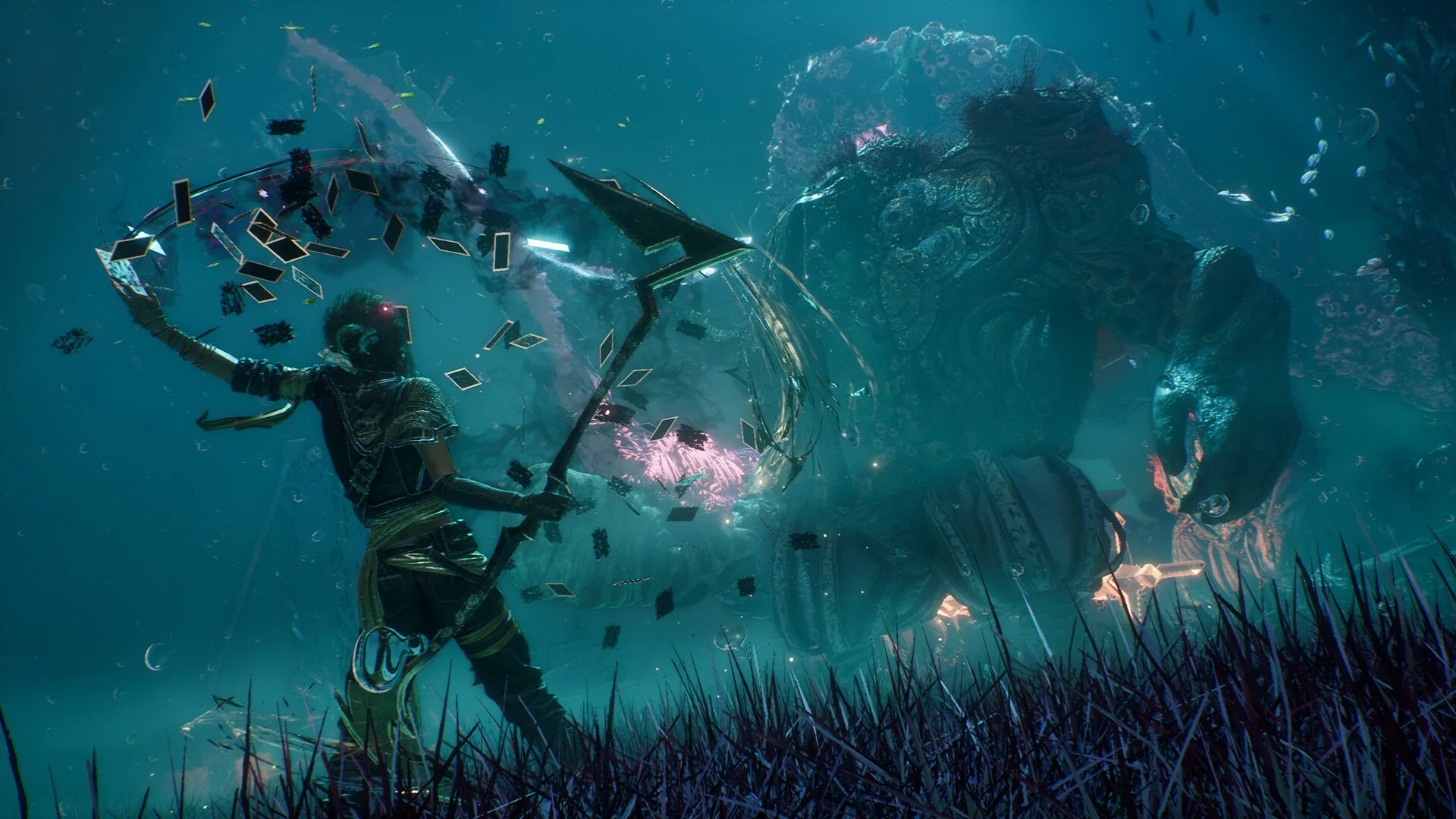
Obviously, we didn’t make Witchfire with 26 people, because we use outsourcing, and Sandfall Interactive used a lot of outsourcing – when you roll the credits on Expedition 33, it’s 10 or 15 minutes long. But still, that doesn’t change the fact that the core team responsible for the vast majority of the game and the ideas and execution is around 30 people, half of which are new. So it’s the biggest mystery in gaming right now.
But when you actually look at Expedition 33 from a designer’s point of view, there’s an incredible amount of smart decisions that allow them to make a game that looks AAA, but is in reality full of shortcuts.
I’ll give you two examples: one is very easy, the other is more complex. The easy one is the enemies don’t have faces. You don’t really think about it, because the main characters have faces, but 99% of enemies don’t have a face that you need to animate.
A more complex one is that I couldn’t understand how such a small studio can produce such high-quality cinematics. But then when you watch it, 99% of these cut scenes are actually theatre plays, meaning the characters do not interact with the environment: It’s just a person talking to another person. And that means they could record them regardless of what’s happening with the levels: They could be done in complete separation. It takes a lot of effort and time to match animations with the environment, because even an act as simple as moving a chair to the right suddenly becomes a super, super complicated thing.
You often hear game makers saying things along the lines of, “blowing stuff up is easy, but having a character sit down on a chair can take weeks of work”…
Absolutely true. For example, when Naughty Dog released the teaser for the new game they’re making, it looked normal, but in reality they were showing off because the character is putting on a jacket in the first seconds. And this is something you don’t do. You just avoid this. You just cut to something else and play the sound of somebody putting on the jacket.
[Clair Obscur showed] what was missing in AAA games, which is finding shortcuts, [rather than] brute forcing: “Hey, there’s 500 of us, but maybe if there’s 700 of us, then the game will be faster.”
Again, this is something we talked about in that interview with Alexandre Amancio. He said throwing more people at a problem doesn’t necessarily make it easier to solve that problem.
Right, right. And going back to Expedition 33, that game is absolutely full to the brim with really smart ideas, but in order to make these ideas, first you need to understand how games work. You have to have this experience in order to find these shortcuts. So apparently there’s a couple of really, really talented individuals in that studio who were finding all these ways to make this game appear way bigger than it really is.
I guess there is a lot of smoke and mirrors in that game, isn’t there? There’s lots of corridors disguised as big levels.
Absolutely. And you can easily see they were learning as they were going. For example, the opening levels of the game are really simple. I was like, “Hey, am I playing a PlayStation 2 game?” Because they’re really small, really tight, really corridor-like. But then you get to the end of the game and it’s like, shit, man, this is spectacular. The level is multilayered and big, and it’s clear they figured it out somewhere in the middle of making all these levels – which accidentally works very well for the player, because you have this feeling of growth, that the game grows with you.
Well, let’s talk a little bit about Witchfire. Obviously you’ve got a small team, and I wonder how much technology has helped you create this amazing looking game.
We are kind of old school in that I said to the guys: “We’re not modifying Unreal Engine. Without any change to the engine, you can make 99% of what you really want to have in the game, and that 1% is not worth the changes and the headaches that this would cost.” So I don’t think we are using anything that is not industry standard, with the small exception of photogrammetry, because we were one of the first studios to introduce it to the masses.
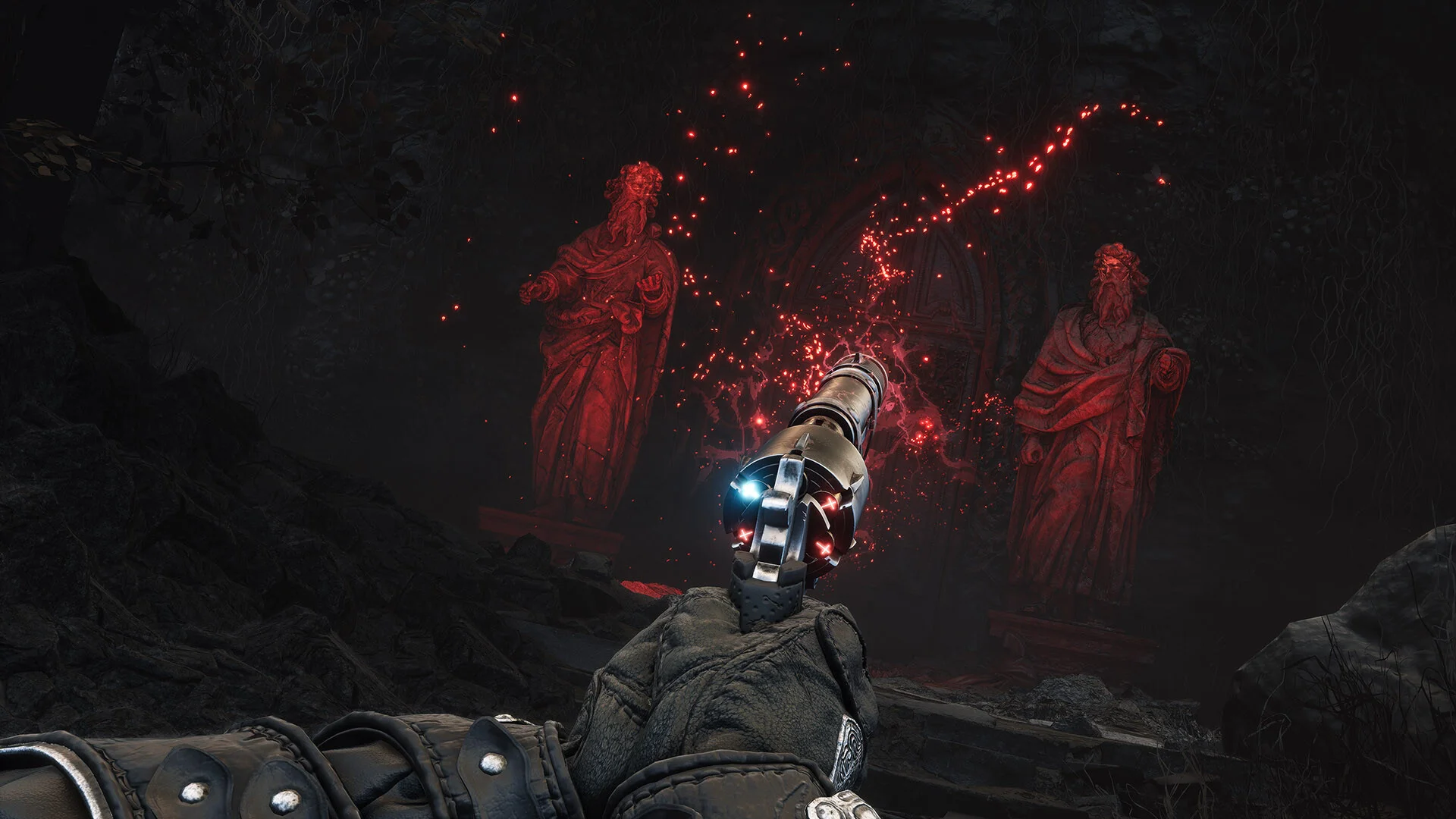
I think photogrammetry is still magic, and we’re still using a lot of it. A lot of Witchfire is basically our guys with drones and cameras.
It’s interesting that you made the game with Unreal Engine 4 rather than 5. Why didn’t you move over to Unreal 5?
Because when we started, the engine was simply not mature enough. And there is nothing really that we needed for Witchfire. I’m sure we will switch to Unreal 5 with the next game, that’s a given – or maybe it’s going to be Unreal 6 by that time, I don’t know. But for Witchfire, everything we wanted to achieve, we had achieved with the visuals.
I know that Unreal 5 is getting much more efficient. There was an update very recently that gave it a really significant post in frame rate. But then again, we’re going to be releasing this year.
It’s a little bit late to change at this point! And I know when I spoke to the developers of Clair Obscur about switching to Unreal Engine 5 halfway through development, they said it meant they had to recalibrate pretty much all the lighting, so it was quite a big change.
Unreal Engine 5 is really Unreal Engine 4 in disguise, so it’s not as hard. But for example, when we switched from Unreal Engine 3 for the original PC version of Ethan Carter to using Unreal Engine 4 to release it on PlayStation 4, it literally took us a year and that wasn’t a conversion: We just made the game from scratch, because that was easier and faster.
So Unreal 5 probably wouldn’t have been the same kind of drama, but I’m not really willing to find out!
I wanted to ask you about extraction shooters as well. Witchfire has extraction shooter elements, and these games have been massive recently, with Arc Raiders selling millions in 2025, plus Marathon is coming up later this year alongside various other examples of the genre. Do you think this is going to be an advantage for you, or a disadvantage?
I think it’s a disadvantage, but not because of the competition. I think some players might hear that there are extraction elements in Witchfire and think, “Oh my God, yet another game that jumped on the bandwagon. Is it something that even fits this game? Is it necessary? Did they add it just because they wanted to have it in the game because it’s popular?” So all these kinds of questions that I’m not enjoying very much, and which are painful to us, because we added these extraction elements before that term was popular, before anybody thought that it would become a subgenre.
And it wasn’t even [inspired] by any other games in the genre – it was inspired by the very end of that famous Call of Duty: Modern Warfare mission, ‘All Ghillied Up’. Basically, at the end of it, you need to wait for an extraction, the helicopter is coming, but you need to survive for a couple of minutes. That section made an incredibly big impression on me, and this is what I wanted to have in Witchfire.
Raiders of the Lost Ark is actually something we bring up a lot when we discuss the design of Witchfire. That opening of Raiders actually radiates onto a lot of things in Witchfire, including the extraction element. At first it’s relatively slow, and you’re planning ahead. Indiana then executes his plan with swapping the idol, but then shit hits the fan, and it’s escalation and it’s chaos, and you need to survive – which is what happens a lot in Witchfire.
So when somebody calls Witchfire an extraction game, first it pains me a little, because it might give the wrong impression, but second, we are not. We are a hybrid.
We have souls-like elements, we have Metroidvania elements, we have rogue-like elements, we have extraction elements. Actually, we have so many different elements used together that at one point we just announced to the players that we’re calling ourselves an RPG shooter. And that is really, truly the closest to what Witchfire really is. So yeah, I’m a little worried that if somebody hears that Witchfire is an extraction shooter, it will give the wrong impression of what the game truly is.
This interview has been edited for length and clarity.
Via: gamesindustry.biz